חלק ג׳ פרק נ׳
ההנא איצ'א אמור הי מן סתרי תורה קד עת'ר פיהא כת'ירון פינבגי תביינהא והי הד'ה אלחכאיאת אלתי תחכי פי אלתורה אלתי יט'ן אנהא לא פאידה פי ד'כרהא מת'ל וצפה תפרע אלקבאיל מן נח ואסמאהם ומואצ'עהם וכד'לך בני שעיר החרי ווצף המלכים אשר מלכו בארץ אדום ונחו הד'ה. וקד עלמת קולהם אן מנשה הרשע אנמא כאן יעמר מג'לסה אלמנחט באנתקאד הד'ה אלמואצ'ע קאלוא היה יושב ודורש בהגדות של דופי היה אומר לא היה לו למשה לכתוב ואחות לוטן תמנע וגו' ואנא אכ'ברך בג'מלה ובעד ד'לך ארג'ע ללתפציל כמא פעלת פי תעליל אלמצות.
יש כאן דברים שהם ׳סתרי תורה׳ גם כן, כבר נכשלו בהם רבים וצריך לבארם, והם – אלו הסיפורים אשר סופרו ב׳תורה׳ אשר יחשבו רבים שאין תועלת בזכרם – כספרו הסתעף המשפחות מן נוח ושמותם ומקומותם, וכן: בְנֵי שֵׂעִיר הַחוֹרִיבראשית לו,כ וסיפור הַמְּלָכִים אֲשֶׁר מָלְכוּ בְּאֶרֶץ אֱדוֹםבראשית לו,לא וכיוצא בהם. וכבר ידעת אמרם ש׳מנשה הרשע׳ לא היה מרבה מושבותיו הפחותים רק בדקדוקי אלו המקומות – אמרו: ״היה יושב ודורש בהגדות של דופי, היה אומר לא היה לו למשה לכתוב אלא ׳ואחות לוטן תמנע וגו׳׳?״. ואני אודיעך כלל אחד, ואשוב אחר כן אל הפרטים כאשר עשיתי בטעמי ה׳מצוות׳.
Il y a encore d’autres choses qui font partie des mystères de la Loi, et qui, ayant embarrassé beaucoup de personnes, ont besoin d’explication. Ce sont certains récits rapportés dans le Pentateuque, et dans lesquels on ne voit aucune utilité, comme, par exemple, lorsqu’on énumère les peuples descendus de Noé, leurs noms et les lieux de leurs habitations (Genèse, chap. X), les ’Horéens, descendants de Séir, ainsi que les rois qui régnèrent dans le pays d’Édom (Ibid., 36, 20, 31 et suiv.), et d’autres récits semblables. Les docteurs disent, comme tu le sais, que l’impie Manassé ne faisait qu’occuper sans cesse son ignoble conseil de la critique de ces passages : « Il y était assis, disent-ils, faisant l’exégète en parodiant les Haggadôth ; il disait, par exemple : Moïse avait-il besoin d’écrire : la sœur de Lotan fut Timna’ (Ibid., v. 22) ? » Je vais d’abord te faire connaître un principe général, ensuite je reviendrai aux détails, comme je l’ai fait en motivant les commandements.
- 1 L’expression
 signifie proprement il fréquentait son lieu de réunion ou sa salle de séance. Cf. les Séances de Hariri (édit. de Silvestre de Sacy), p. 199 :
 , où, selon le commentaire, le verbe
 est pris dans le sens de visiter une réunion. Le sens est donc que le roi Manassé faisait sans cesse retentir dans sa salle de séance la critique de ces passages.
- 2 Littéralement : interprétant (l’Écriture) par des Haggadôth de blasphème, c’est-à-dire en faisant de mauvaises plaisanteries sur le texte sacré. Voy. Talmud de Babylone, traité Synhédrin, fol. 99 b, où l’on cite plusieurs de ces critiques du roi Manassé, fils d’Ézéchias.—Dans nos éditions du Talmud, on lit : אלא ואחות וגו׳ ; de même dans la plupart des mss. arabes et hébreux du Guide. Mais la conjonction אלא, qui ne paraît pas ici à sa place, a été omise dans quelques anciens mss. arabes et dans la version d’Al-’Harîzi.
THERE are in the Law portions which include deep wisdom, but have been misunderstood by many persons.; they require, therefore, an explanation. I mean the narratives contained in the Law which many consider as being of no use whatever; e.g., the list of the various families descended from Noah, with their names and their territories (Gen. x.); the sons of Seir the Horite (ibid. 36:20-30); the kings that reigned in Edom (ibid. 31, seq.); and the like. There is a saying of our Sages (B Ṭ. Sanh. 99b) that the wicked king Manasse frequently held disgraceful meetings for the sole purpose of criticising such passages of the Law. “He held meetings and made blasphemous observations on Scripture, saying, Had Moses nothing else to write than, And the sister of Lotan was Timna” Genesis XXXVI:22? With reference to such passages, I will first give a general principle, and then discuss them seriatim, as I have done in the exposition of the reasons of the precepts.
אעלם אן כל קצץ תג'דה מד'כורא פי אלתורה פהו לפאידה צ'רוריה פי אלשריעה אמא לתצחיח ראי הו קאעדה מן קואעד אלשריעה או לאצלאח עמל מן אלאעמאל חתי לא יקע בין אלנאס תט'אלם ועדואן ואנא אנסק לך ד'לך נסקא.
דע כי כל סיפור שתמצאהו כתוב ב׳תורה׳ הוא לתועלת הכרחית בתורה, אם לאמת דעת שהוא פינה מפינות התורה, או לתיקון מעשה מן המעשים, עד שלא יהיה בין בני אדם עול וחמס. ואני אסדר לך זה.
Sache que, chaque fois que tu trouves dans le Pentateuque un récit quelconque, il a nécessairement une certaine utilité pour la religion, soit qu’il confirme une des idées fondamentales de la religion, soit qu’il nous enseigne une certaine règle de conduite, afin qu’il n’y ait entre les hommes ni violence réciproque, ni injustice. Je vais maintenant parcourir les différents cas.
- 3 Les éditions de la version d’Ibn-Tibbon portent ואני אסיר לך הספק ; les mss. ont : ואני אסדר לך זה. La version d’Al-’Harîzi porte : ואני אסדר לר הכל.
Every narrative in the Law serves a certain purpose in connexion with religious teaching. It either helps to establish a principle of faith, or to regulate our actions, and to prevent wrong and injustice among men; and I will show this in each case.
למא כאנת קאעדהֵ אלשריעה אן אלעאלם מחדת' ואן אלד'י כ'לק אולא שכ'ץ ואחד מן נוע אלאנסאן והו אדם ומא באלעהד מן קדם מן אדם למשה רבנו אלפאן וכ'מס מאיהֵ סנה בתקריב פלו וקע להם הד'א אלאכ'באר פקט לבאדר אלאנסאן חיניד' ללתשכך אד' וג'ד אלנאס מפרקין פי אקאצי אלארץ' בג'מלתהא וקבאיל מכ'תלפה ואלסן מכ'תלפה מתבאעדה ג'דא פאזיל הד'א אלתשכיך בנסבתהם כלהם ותפריעהם וד'כר אסמא אולאיך אלמשאהיר פלאן אבן פלאן ואעמארהם ואלאכ'באר במוצ'ע סכנהם ובאלעלה אלמוג'בה לתפרקהם פי אקאצי אלארץ' ובאלעלה אלמוג'בה לאכ'תלאף אלסנתהם ואן כאן אולהם פי מוצ'ע ואחד ולגה ואחדה ללכל אד' הכד'א ילזם לכונהם אולאד שכ'ץ ואחד. וכד'לך וצף קצהֵ אלמבול וקצהֵ סדום ועמורה ללאסתדלאל עלי אלראי אלצחיח והו אך פרי לצדיק אך יש אלהים שופטים בארץ.
כאשר היתה פינת התורה – שהעולם מחודש ואשר נברא תחילה היה איש אחד ממין האדם והוא אדם הראשון, ולא היה באורך הזמן אשר מאדם עד ׳משה רבינו׳ רק אלפים וחמש מאות שנה בקרוב; ואילו בא להם זה הסיפור לבד היה האדם מסופק בדבר – כי נמצאו אז בני האדם מפוזרים בקצוות הארץ כולה ומשפחות חלוקות ולשונות חלוקות רחוקות מאד; והוסר הספק הזה ביחסם כולם וזכרון הסתעפם, וזכור שמות המפורסמים מהם פלוני בן פלוני ושנותיהם, ולהגיד מקום שכנם, והטעם המביא להתפזרם בקצות הארץ, והטעם המביא להחלק ללשונותם, ושמתחלה היו במקום אחד ושפה אחת לכולם, כי כן ראוי להיותם בני איש אחד. וכן ענין סיפור ה׳מבול׳ וסיפור סדום ועמורה – ללמוד מהם ראיה על הדעת האמיתי, והוא אַךְ פְּרִי לַצַּדִּיק אַךְ יֵשׁ אֱלֹהִים שׁוֹפְטִים בָּאָרֶץתהלים נח,יב.
Comme c’est une croyance fondamentale de la religion que le monde est créé, qu’au commencement il ne fut créé qu’un seul individu de l’espèce humaine qui est Adam, et que les temps anciens depuis Adam jusqu’à Moïse notre maître ne formaient qu’un espace de deux mille cinq cents ans à peu près, ces faits, énoncés d’une manière pure et simple, auraient été promptement mis en doute ; car alors déjà on trouvait les hommes disséminés à toutes les extrémités de la terre, formant des peuples différents, parlant des langues différentes, très-éloignées les unes des autres. On fit donc taire ces doutes en nous indiquant leur généalogie à tous et leur extraction, en mentionnant les noms des plus connus d’entre eux, « un tel fils d’un tel », ainsi que leurs âges, et en faisant connaître le lieu de leur habitation, ainsi que la raison pourquoi ils étaient disséminés aux extrémités de la terre et pourquoi leurs langues étaient si différentes, quoiqu’ils fussent tous primitivement dans le même lieu et qu’ils parlassent la même langue, comme cela devait être, puisqu’ils étaient les enfants d’un seul individu. De même, le récit de l’histoire du déluge et de celle de Sodome et Gomorrhe avait pour but de montrer la vérité de cette idée : « une récompense est réservée au juste ; certes il y a un Dieu qui juge la terre » Psaume LVIII, 12.
It is one of the fundamental principles of the Law that the Universe has been created ex nihilo, and that of the human race, one individual being, Adam, was created. As the time which elapsed from Adam to Moses was not more than about two thousand five hundred years, people would have doubted the truth of that statement if no other information had been added, seeing that the human race was spread over all parts of the earth in different families and with different languages, very unlike the one to the other. In order to remove this doubt the Law gives the genealogy of the nations (Gen. v. and x.), and the manner how they branched off from a common root. It names those of them who were well known, and tells who their fathers were, how long and where they lived. It describes also the cause that led to the dispersion of men over all parts of the earth, and to the formation of their different languages, after they had lived for a long time in one place, and spoken one language (ibid. xi.), as would be natural for descendants of one person. The accounts of the flood (ibid. vi.-viii.) and of the destruction of Sodom and Gomorrah (ibid. xix.), serve as an illustration of the doctrine that “Verily there is a reward for the righteous; verily He is a God that judgeth in the earth” Psalm LVIII:12.
וכד'לך וצף תלך מלחמת אלתסעה מלוך ללאכ'באר באלמעג'זה אלתי הי ט'פר אברהם בעדד נזר לא מלך מעהם בארבעה מלוך עט'מא ואיצ'א אעלמנא בחמיתה לקריבה למא כאן עלי עקידתה ואלקי בנפסה לאכ'טאר אלחרב חתי כ'לצה ואעלמנא איצ'א בקנאעתה ושבע נפסה וכונה מתהאונא באלתכסב מחתפלא בכרם אלאכ'לאק וד'לך קולה אם מחוט ועד שרוך נעל וגו'
וכן סיפור ׳מלחמת׳ תשעת המלכים – להודיע המופת בניצוח אברהם באנשים מתי מספר ואין מלך עליהם, ארבעה מלכים גדולים; ועוד הודיענו איך חם לבבו על קרובו בעבור שגדל על אמונתו, ומסר נפשו לסכנת המלחמה כדי להצילו; והודיענו גם כן בהסתפקותו ושובע נפשו והיותו בז לממון ומתפאר בטוב המדות – והוא אמרו: אִם מִחוּט וְעַד שְׂרוֹךְ נַעַל וגו׳בראשית יד,כג.
De même, la description de la guerre des neuf rois a pour but de faire connaître ce miracle, à savoir la victoire remportée par Abraham, avec un petit nombre d’hommes n’ayant pas de roi avec eux, sur quatre rois puissants. On nous fait savoir aussi comment il défendit son parent (Lot), qui avait la même croyance que lui, et comment il aborda les dangers de la guerre pour le sauver. Enfin, on nous fait connaître combien il était réservé, modérant ses désirs, méprisant le gain et s’appliquant aux mœurs généreuses, comme il est dit : « Fût-ce un fil, fût-ce la courroie d’une sandale, etc. » Genèse XIV, 23.

The narration of the war among the nine kings (ibid. xiv.) shows how, by means of a miracle, Abraham, with a few undisciplined men, defeated four mighty kings. It illustrates at the same time how Abraham sympathized with his relative, who had been brought up in the same faith, and how he exposed himself to the dangers of warfare in order to save him. We further learn from this narrative how contented and satisfied Abraham was, thinking little of property, and very much of good deeds; he said, “I will not take from a thread even to a shoe-latchet” Genesis XIV:23
ואמא וצף קבאיל בני שעיר ונסבהם אלשכ'צי פד'לך מן אג'ל מצוה אחת וד'לך אנה תעאלי אמר באסתיצאל זרע עמלק כ'אצה ועמלק אנמא הו בן אליפז מן תמנע אחות לוטן אמא סאיר בני עשו פמא אמר בקתלהם וכאן עשו קד צאהר בני שעיר כמא בין אלנץ ואולד מנהם ומלך עליהם ואכ'תלט נסלה בנסלהם וצארת בלאד שעיר כלהא ותלך אלקבאיל מנסובה ללקביל אלגאלב אלד'י הם בני עשו ובכ'אצה נסל עמלק לאנה כאן אנג'דהם. פלו לם תבין הד'ה אלאנסאב ותפצילהא לקתלוא כלהם גפלא פבין אלכתאב קבאילהם וקאל אן האולא אלד'ין תרונהם אליום פי שעיר ומלך עמלק ליס הם כלהם בני עמלק בל הם בנוא פלאן ובנוא פלאן ואנמא אנסבוא לעמלק לכון אמה מנהם. הד'א כלה עדל מן אללה חתי לא יקתל קביל פי גמאר קביל אכ'ר לאן אלגזרה אנמא כאנת עלי נסל עמלק כ'אצה. וקד בינא וג'ה אלחכמה פי ד'לך.
אמנם סיפור משפחות ׳בני שעיר׳ ויחסם בפרט הוא מפני ׳מצוה אחת׳. והוא – שהאלוה ית׳ ציוה למחות ׳זרע עמלק׳ לבד ועמלק אמנם היה ׳בן אליפז׳ מן ׳תמנע אחות לוטן׳ אך שאר ׳בני עשו׳ לא ציוה להרגם; וכבר נתחתן עשו עם ׳בני שעיר׳ כמו שהתבאר בכתוב, והוליד מהם ומלך עליהם ונתערב זרעו בזרעם ושבו ארצות שעיר כולם, והמשפחות ההם מיוחסות למשפחה הגוברת אשר הם ׳בני עשו׳ וכל שכן זרע עמלק כי הוא היה הגיבור שבהם. ואילו לא התבארו היחסים ההם ופרטיהם היו כולם נהרגים בפשיעה; לכן באר הכתוב משפחותיהם ואמר שאלו תראו אותם בשעיר ומלכות עמלק אינם כולם ׳בני עמלק׳ אבל הם בני פלוני ובני פלוני ונתיחסו לעמלק להיות אמם מעמלק. זה כולו יושר מאלוה עד שלא תהרג משפחה בתוך משפחה אחרת – כי ה׳גזרה׳ לא היתה רק על זרע עמלק. וכבר בארנו אופני החכמה בזה.
- חיבור אחר: Bible, Genesis, Gen. 36:2, 20-30 בינה מלאכותית
- → ג׳, מ״א הערת מונק
Si l’on énumère toutes les tribus des Séirites et si on donne leur généalogie individuelle, ce n’est qu’à cause d’un seul commandement : c’est que Dieu a ordonné particulièrement d’exterminer la race d’Amalek. Amalek n’était autre que le fils d’Éliphas (que celui-ci eut) de Timna’, sœur de Lotan. Mais Dieu n’avait pas ordonné de tuer les autres fils d’Ésaü ; or, Ésaü s’étant allié avec les Séirites, comme le dit clairement l’Écriture, eut des enfants de cette race. Il régna sur eux, sa race se confondit avec la leur ; ce qui fit qu’on attribua tout le pays de Séir, avec ses tribus, à la tribu prépondérante, qui était celle des descendants d’Ésaü, et particulièrement celle d’Amalek, qui était la plus noble d’entre elles. Si donc on n’avait pas désigné toutes ces familles en détail, elles auraient pu être tuées par erreur. C’est pourquoi l’Écriture désigne expressément leurs tribus, voulant dire : ceux que vous voyez aujourd’hui dans le pays de Séir et dans le royaume d’Amalek ne sont pas tous des descendants d’Amalek, mais les descendants d’un tel et d’un tel ; et, si on les fait remonter à Amalek, c’est parce que la mère de celui-ci appartenait à leur race. Tout cela dénote la justice divine qui n’a pas voulu qu’une tribu fût tuée pêle-mêle avec une autre tribu ; car le décret divin ne frappait que la race d’Amalek en particulier. Nous avons déjà exposé quelle sagesse il y avait dans cette mesure.
- 4 Voy. Genèse, chap. XXXVI, v. 20-30.
- 1 Voy. ibid., v. 12 et 22. On voit que, selon l’opinion de l’auteur, les Amalécites descendaient d’Éliphaz, fils d’Ésaü, ce qui est aussi l’opinion de Josèphe (Antiquités, liv. II, chap. I, §2) ; si donc, dans l’histoire d’Abraham, il est déjà question du territoire des Amalécites (Genèse, XIV, 7), il faut admettre que l’auteur de la Genèse s’est servi de ce nom par anticipation, comme le fait déjà observer Raschi dans son Gommentaire à ce passage.
- 2 Selon un passage de la Genèse, chap. XXXVI, v. 25, Oholibama, une des femmes d’Ésaü, descendait des Séirites, quoique, dans un autre passage (ibid., v. 2), elle soit appelée ’Hiwite.
- 3 C’est-à-dire, parce que Timna’, mère d’Amalek, appartenait à la race des Séirites. Ibn-Tibbon fait un contre-sens en traduisant : להיות אמם מעמלק ; Al-’Harîzi traduit : מפני שהיתה אמו מהם.
- 4 Sur le sens du mot גמאר
 , voy. le t. I, p. 223, note 3.
- 5 Voy. ci-dessus, chap. XLI, p. 332.
The list of the families of Seir and their genealogy is given it the Law ibid. XXXVI:20-36, because of one particular commandment. For God distinctly commanded the Israelites concerning Amalek to blot out his name Deuteronomy XXV:17-19. Amalek was the son of Eliphas and Timna, the sister of Lotan (ibid. 36:12). The other sons of Esau were not included in this commandment. But Esau was by marriage connected with the Seïrites, as is distinctly stated in Scripture: and Seïrites were therefore his children: he reigned over them; his seed was mixed with the seed of Seir, and ultimately all the countries and families of Seir were called after the sons of Esau who were the predominant family, and they assumed more particularly the name Amalekites, because these were the strongest in that family. If the genealogy of these families of Seir had not been described in full they would all have been killed, contrary to the plain words of the commandment. For this reason the Seirite families are fully described, as if to say, the people that live in Seir and in the kingdom of Amalek are not all Amalekites: they are the descendants of some other man, and are called Amalekites because the mother of Amalek was of their tribe. The justice of God thus prevented the destruction of an [innocent] people that lived in the midst of another people [doomed to extirpation]; for the decree was only pronounced against the seed of Amalek. The reason of this decree has already been stated by us (p. 205)
ואמא עלהֵ וצפה המלכים אשר מלכו בארץ אדום לאן מן ג'מלהֵ אלמצות לא תוכל לתת עליך איש נכרי אשר לא אחיך הוא והאולא אלמלוך אלד'ין ד'כר ליס מנהם אחד מן אדום אלא תראה ינסבהם וינסב בלאדהם פלאן מן אלמוצ'ע אלפלאני ופלאן מן אלמוצ'ע אלפלאני. ואלאקרב ענדי אן כאנת סירתהם ואכ'בארהם משהורה אעני סירהֵ אולאיך מלכי אדום ואנהם תג'רווא פי בני עשו וד'לוהם פד'כרהם בהם כאנה יקול אעתברוא באכ'ותכם בני עשו אלד'י כאן מלוכהם פלאן ופלאן ואפעאל אולאיך כאנת משהורה לאן מא ראס מלה שכ'ץ מן גיר נסבהא אלא ואנכי פיהא נכאיה אמא עט'ימה או צגירה.
וטעם ספרו ה״מלכים אשר מלכו בארץ אדום״ כי מכלל ה׳מצוות׳ – לֹא תוּכַל לָתֵת עָלֶיךָ אִישׁ נָכְרִי אֲשֶׁר לֹא אָחִיךָ הוּאדברים יז,טו; ואלו המלכים אשר זכר אין אחד מהם מאדום – הלא תראה שהוא מיחס אותם ומיחס ארצותם פלוני ממקום פלוני ופלוני מפלוני. והקרוב אצלי – שהיו מנהגיהם ועניניהם מפורסמים – רצוני לומר: עניני ה׳מלכים׳ ההם אשר לאדום ושהם הכניעו ׳בני עשו׳ והשפילום; והזכירם האלוה בהם כאילו אמר בחנו באחיכם ׳בני עשו׳ שהיו מלכיהם פלוני ופלוני, ומעשיהם היו מפורסמים כי לא המליכה אומה איש שאינו מיחסה שלא ציער אותה צער גדול או קטן.
La raison pourquoi on énumère « les rois qui régnèrent dans le pays d’Édom » Genèse XXXVI, 31, c’est qu’il y a un commandement qui dit : « Tu ne pourras pas placer à ta tête un homme étranger, qui ne soit pas ton frère » Deutéronome XVII, 15. Or, parmi les rois qu’on mentionne, il n’y en avait pas un seul qui fût originaire d’Édom ; ne vois-tu pas qu’on indique leur famille ainsi que leur pays, un tel, de tel lieu ; un tel, de tel autre lieu ? Il me paraît très-probable que leurs actes et leur histoire étaient généralement connus, je veux dire les actes de ces rois d’Édom, et que ceux-ci tyrannisèrent et humilièrent les desendants d’Ésaü ; c’est pourquoi on les rappelle aux souvenirs (des Israélites). C’est comme si l’on eût dit : « Tirez un avertissement de vos frères les descendants d’Ésaü, qui avaient pour roi un tel ou un tel [dont les actes étaient alors bien connus] ; car jamais un homme de race étrangère n’a régné sur une nation sans exercer sur elle une tyrannie plus ou moins grande. »
- 1 Maïmonide a peut-être suivi ici le Sépher hayaschar ; cf. le Biour, ou Commentaire hébreu de Mendelssohn à ce passage. Il ne résulte pas positivement du texte biblique que ces rois des Iduméens fussent tous des étrangers ; au contraire, Yobab, de Bosra, et ’Houscham, du pays des Témanites (v. 33 et 34), étaient très-probablement des Iduméens.
- 2 Le verbe que nous avons écrit
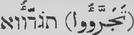 est écrit dans les mss. תגׄרוא, et dans quelques-uns תגרוא (le ג sans point). Nous croyons que c’est la Ve forme de
 , signifiant : strenuum, audacem et animosum se ostendit. Pour le second verbe, les mss. ont ודלוהם ; je crois qu’il faut lire
 , et ils les humilièrent ou abaissèrent, quoique les dictionnaires n’attribuent point à la première forme,
 , le sens actif. Peut-être faut-il écrire
 , ou
 , à la IIe ou à la IVe forme. Ibn-Tibbon traduit : ושהם הכניעו בני עשו והשפילום ; Al-’Harîzi a : וכי הם גברו בבני עשו והכניעום.
- 3 Je crois qu’il faut prononcer le verbe פדׄכרהם à la IIe forme
 ; le suffixe de ce verbe paraît se rapporter aux Israélites sous-entendus, et le mot à mot serait : on les avertit par eux ; c’est-à-dire, on donne aux Israélites un avertissement en leur rappelant la conduite des rois d’Édom.
The kings that have reigned in the land of Edom are enumerated (Gen 36:51, seq.) on account of the law, “Thou mayst not set a stranger over thee, which is not thy brother” Deuteronomy XVII:15. For of these kings none was an Edomite; wherefore each king is described by his native land; one king from this place, another king from that place. Now I think that it was then well known how these kings that reigned in Edom conducted themselves, what they did, and how they humiliated and oppressed the sons of Esau. Thus God reminded the Israelites of the fate of the Edomites, as if saying unto them, Look unto your brothers, the sons of Esau, whose kings were so and so, and whose deeds are well known. [Learn therefrom] that no nation ever chose a foreigner as king without inflicting thereby some great or small injury upon the country.
ובאלג'מלה מת'ל מא ד'כרת לך מן בעד מד'אהב אלצאבה ענא אליום כד'לך תואריך' תלך אלאיאם כ'פיה ענא אליום פלו עלמנאהא ועלמנא תלך אלנואזל אלתי נזלת פי תלך אלאיאם לתבין לנא עלי אלתפציל עלהֵ כת'יר ממא ד'כר פי אלתורה.
סוף דבר, כמו שאמרתי לך, מרחוק דעות הצאבה ממנו היום כן דברי הימים ההם נעלמו ממנו היום; ואילו ידענום וידענו המקרים אשר קרו בימים ההם היה מתבאר לנו בפרט טעם רוב מה שנזכר ב׳תורה׳.
En somme, ce que je t’ai dit de l’intervalle qui nous sépare aujourd’hui des usages religieux des Sabiens peut aussi s’appliquer à l’histoire de ces temps qui nous est aujourd’hui inconnue ; car, si nous la connaissions et si les événements arrivés dans ces temps-là nous étaient connus, nous comprendrions, à l’égard de nombreux détails, le motif qui les a fait mentionner dans le Pentateuque.
- 1 Voy. le chap. précédent, vers la fin, p. 422.
In short, what I remarked in reference to our ignorance of the Sabean worship, applies also to the history of those days. If the religious rules of the Sabeans and the events of those days were known to us, we should be able to see plainly the reason for most of the things mentioned in the Pentateuch.
וממא ינבגי אן תחצלה אן ליס אעתבאר אלאכ'באר אלמכתובה כאעתבאר אלאחואל אלמשאהדה לאן פי אלאחואל אלמשאהדה ג'זאיאת תוג'ב צ'ראיר עט'ימה לא ימכן ד'כרהא או יטול פאד'א תומלת תלך אלאכ'באר יט'ן אלשכ'ץ אלמתאמל אן הד'א אלאכ'באר פיה תטויל או תכריר ולו כאן משאהדא למא חכי לעלם צ'רוריהֵ מא קיל. פלד'לך אד'א ראית אכ'בארא פי אלתורה פי גיר אלתשריע תט'ן אן ד'לך אלכ'בר גיר צ'רורי אלוצף או אן פיה תטויל או תכריר ועלהֵ ד'לך כונך גיר משאהד ללג'זאיאת אלדאעיה לד'כר מא ד'כר עלי מא ד'כר.
וממה שצריך שתדעהו – כי אין בחינת הסיפורים הנכתבים כבחינת הענינים הנראים, כי בענינים הנראים – פרטים מביאים לדברים צריכים מאד אי אפשר לזכרם רק באריכות; וכשיתבונן באדם בסיפורים ההם יחשוב שיש בהם אריכות או כפל דברים ואילו היה רואה מה שסופר היה יודע צורך מה שנאמר. ומפני זה כשתראה ב׳תורה׳ סיפורים בזולת המצוה ותחשוב שהסיפור ההוא אין צורך לזכרו או שיש בו אריכות – אינו רק להיותך בלתי רואה הפרטים המביאים לזכור מה שנזכר.
Ce qu’il faut encore bien comprendre, c’est qu’on ne considère pas les relations écrites, au même point de vue que les événements dont on est témoin ; car, dans ces derniers, il y a certains détails ayant des suites nécessaires qu’on ne peut rapporter sans prolixité. C’est pourquoi, en lisant ces relations, le lecteur y trouve de la prolixité ou des répétitions ; mais s’il avait été témoin de ce qui est raconté, il comprendrait que ce qui a été dit est nécessaire. Quand donc tu vois des relations dans la partie non législative du Pentateuque, il te semble quelquefois que telle ou telle relation n’avait pas besoin d’être écrite, ou qu’elle renferme soit des longueurs, soit des répétitions ; la raison en est que tu n’as pas été témoin des détails qui ont amené (l’auteur) à faire sa relation telle qu’il l’a faite.
- 2 L’auteur, comme on va le voir, veut parler des relations écrites qui semblent parfois prolixes au lecteur, mais dont celui-ci comprendrait bien les longueurs s’il avait pu être témoin des événements et en saisir l’enchaînement nécessaire. Dans les éditions de la version d’Ibn-Tibbon, les mots מפני האריכות, à la fin de la phrase, sont un contre-sens ; les mss. de cette version portent : רק באריכות.
- 3 Les mots או תכריר ont été omis par Ibn-Tibbon.—Selon la version d’Ibn-Tibbon, il faudrait traduire : et quand il te semble que telle ou telle relation, etc., ce n’est que parce que tu n’as pas été témoin… Il paraît avoir lu ותטׄן au lieu de תטׄן, et עלה̈ au lieu de ועלה̈, de sorte que, selon lui, le complément de la phrase ne commence qu’au mot עלה̈.
It is also necessary to note the following observations. The view we take of things described by others is different from the view we take of things seen by us as eye-witnesses. For that which we see contains many details which are essential, and must be fully described. The reader of the description believes that it contains superfluous matter, or useless repetition, but if he had witnessed the event of which he reads, he would see the necessity of every part of the description. When we therefore notice narratives in the Torah, which are in no connexion with any of the commandments, we are inclined to think that they are entirely superfluous, or too lengthy, or contain repetitions; but this is only because we do not see the particular incidents which make those narratives noteworthy.
מן ד'לך ד'כר אלמסעות ט'אהר אלאמר אנה ד'כר מא לא פאידה פיה אצלא ומן אג'ל הד'א אלוהם אלד'י יסבק אלי אלכ'אטר קאל ויכתב משה את מוצאיהם למסעיהם על פי י"י. ומוצ'ע אלחאג'ה אלי ד'לך עט'ים ג'דא וד'לך אן ג'מיע אלמעג'זאת אנמא הי יקיניה ענד אלד'י ראהא פאמא פי אלמסתקבל פיציר ד'כרהא כ'ברא ויתטרק אליה אלתכד'יב ענד אלסאמע ומעלום אנה לא יסתטאע ולא יתצור אן תכון מעג'זה ת'אבתה קאימה עלי מרור אלאג'יאל ללנאס כלהם. ומן מעג'זאת אלשריעה בל מן אעט'מהא אקאמהֵ ישראל פי אלמדבר ארבעין סנה ווג'וד אלמן פיה פי כל יום וד'לך אלמדבר הו כמא ד'כר אלכתאב נחש שרף ועקרב וצמאון אשר אין מים והי מואצ'ע בעידה ג'דא מן אלעמארה גיר טביעיה ללאנסאן לא מקום זרע ותאנה וגפן ורמון וגו' וקיל פיהא איצ'א ארץ לא עבר בה איש וגו' ונץ אלתורה לחם לא אכלתם ויין ושכר לא שתיתם וגו' והד'ה כלהא מעג'זאת בינה מראיה. פלמא עלם אללה תעאלי אנה סיתטרק להד'ה אלמעג'זאת פי אלמסתקבל מא יתטרק ללאכ'באר ויט'ן אן אקאמתהם כאנת פי בריה קריבה מן אלעמראן ימכן מקאם אלאנסאן פיהא מת'ל הד'ה אלברארי אלתי יסכנהא אלערב אליום או אנהא מואצ'ע ימכן פיהא אלחרת' ואלחצאד או אלאגתד'א באחד אלנבאתאת אלתי כאנת הנאך או אן אלמן מן טביעתה אן ינזל פי תלך אלמואצ'ע דאימא או אן פי תלך אלמואצ'ע אבאר מא פלד'לך רפעת הד'ה אלאוהאם כלהא ואכד כ'בר הד'ה אלמעג'זאת כלהא בתביין תלך אלמראחל ליראהא אלאתון פיעלמון עט'ים אלמעג'זה פי מקאם נוע אלאנסאן פי תלך אלמואצ'ע ארבעין סנה.
ומזה – סדר זכר ה׳מסעות׳ יראה מפשוטו של ענין שזכר מה שאין תועלת בו כלל – ומפני זאת המחשבה העולה על הלב אמר וַיִּכְתּוֹב מֹשֶׁה אֶת מוֹצָאֵיהֶם לְמַסְעֵיהֶם עַל פִּי ייבמדבר לג,ב. ומקום הצורך אליו גדול מאד, מפני שכל המופתים אינם אמיתיים רק למי שראם, אך לעתיד ישוב זכרם סיפור, ואפשר שיכזיבם השומע. וידוע שאי אפשר להיות וגם לא יצויר שיהיה מופת עומד קיים לדורות לבני אדם כולם. וממופתי התורה ומן הגדולים שבהם – עמוד ישראל ב׳מדבר׳ ארבעים שנה והמצא בו ה׳מן׳ בכל יום; וה׳מדבר׳ ההוא כמו שזכר הכתוב: נָחָשׁ שָׂרָף וְעַקְרָב וְצִמָּאוֹן אֲשֶׁר אֵין מָיִםדברים ח,טו והם מקומות רחוקים מאד מן הישוב, בלתי טבעיים לאדם לֹא מְקוֹם זֶרַע וּתְאֵנָה וְגֶפֶן וְרִימּוֹן וגו׳במדבר כ,ה ואמר בהם גם כן אֶרֶץ לֹא עָבַר בָּהּ אִישׁ וגו׳ירמיהו ב,ו וכתוב ב׳תורה׳: לֶחֶם לֹא אֲכַלְתֶּם וְיַיִן וְשֵׁכָר לֹא שְׁתִיתֶם וגו׳דברים כט,ה – ואלו כולם – מופתים גדולים גלויים נראים. וכאשר ידע האלוה ית׳ שאפשר לפקפק באלו המופתים בעתיד, כמו שמפקפקים בשאר הסיפורים, ויחשב שעמידתם היתה במדבר קרוב מן הישוב שאפשר לאדם לעמוד בו, כאלו המדברות ששוכנים בהם הערביים היום, או שהם מקומות שאפשר לחרוש בהם ולזרוע ולקצור, או להזון באחד הצמחים אשר היו שם, או שמטבע ה׳מן׳ לרדת במקומות ההם תמיד, או שיש במקומות ההם בארות מים – מפני זה הסיר המחשבות ההם כולם, וחיזק עניני אלו המופתים כולם בבאור המסעות ההם, שיראו אותם הבאים וידעו גודל המופת, בעמוד מין האדם במקומות ההם ארבעים שנה.
De cette catégorie est l’énumération des stations. Il pourrait paraître de prime abord qu’on a raconté une chose absolument inutile ; c’est donc à cause de cette fausse idée qu’on pourrait avoir qu’il est dit : « Et Moïse écrivit leurs départs selon leurs stations par ordre de l’Éternel » Nombres XXXIII, 2. Et cela était d’une très-grande nécessité, car tous les miracles sont certains pour celui qui les a vus ; mais pour la postérité, le récit en devient une simple tradition, et, pour celui qui l’entend, il est facile de le démentir. On sait qu’il est impossible et inimaginable qu’un miracle soit certifié et constaté par tous les hommes dans le cours des siècles. Or, un des miracles rapportés dans le Pentateuque, et même un des plus grands, c’est le séjour de quarante ans que firent les Israélites dans le désert, où ils trouvèrent la manne tous les jours. Dans ce désert, comme le dit le Pentateuque, il y avait « des serpents venimeux, des scorpions, de la sécheresse, pas d’eau » Deutéronome VIII, 15. C’étaient des lieux très-éloignés d’un pays cultivé et qui ne convenaient pas à la nature de l’homme : « un lieu impropre aux semences, où il n’y avait ni figuier, ni vigne, ni grenadier, etc. » Nombres XX, 5 ; on appelle aussi ces lieux : « un pays où jamais un homme n’a passé » Jérémie II, 6 ; et le texte du Pentateuque dit : « vous ne mangiez point de pain et vous ne buviez ni vin, ni boisson forte » Deutéronome XXIX, 5. Tous ces miracles étaient manifestes et visibles. Or, Dieu savait que dans l’avenir, il arriverait à ces miracles ce qui arrive aux traditions, et qu’on penserait qu’ils séjournaient dans un désert voisin des lieux habités, où l’homme peut séjourner, et semblable à ces déserts qu’habitent aujourd’hui les Arabes, ou que c’étaient des lieux où l’on peut labourer et moissonner, ou se nourrir de quelques plantes qui s’y trouvaient, ou qu’il était dans la nature de la manne de tomber continuellement dans ces lieux, ou qu’il y avait dans ces lieux des citernes avec de l’eau. C’est pourquoi, pour lever tous ces doutes, le récit de tous ces miracles a été confirmé par l’énumération de ces stations, afin que les générations futures les vissent et reconnussent la grandeur du miracle par lequel l’espèce humaine a pu séjourner dans ces lieux pendant quarante ans.
- 4 C’est-à-dire, des stations des Hébreux pendant les quarante ans qu’ils passèrent dans le désert (Nombres, chap. XXXIII).
- 1 Les mots ויתטרק אליה אלתכדׄיב paraissent signifier mot à mot : le démenti y trouve accès. Le verbe
 (Ve forme de
 ) ne se trouve point dans les dictionnaires. Ibn-Tibbon traduit : ואפשר שיכזיבם השומע. Plus loin, les mots
 (que dans l’avenir il arriverait à ces miracles ce qui arrive aux traditions) sont ainsi rendus par Ibn-Tibbon : שאפשר לפקפק באלו המופתים בעתיד כמו שמפקפקין בשאר הספורים.
- 1 Voy., par exemple, l’opinion du rationaliste ’Hiwwi-Balkhi citée par Ibn-Ezra dans le Commentaire sur l’Exode, chap. XVI, v. 13.
Of this kind is the enumeration of the stations [of the Israelites in the wilderness] (Num. xxxiii.). At first sight it appears to be entirely useless; but in order to obviate such a notion Scripture says, “And Moses wrote their goings out according to their journeys by the commandment of the Lord” ibid. ver. 2. It was indeed most necessary that these should be written. For miracles are only convincing to those who witnessed them; whilst coming generations, who know them only from the account given by others, may consider them as untrue. But miracles cannot continue and last for all generations; it is even inconceivable [that they should be permanent]. Now the greatest of the miracles described in the Law is the stay of the Israelites in the wilderness for forty years, with a daily supply of manna. This wilderness, as described in Scripture, consisted of places “wherein were fiery serpents and scorpions, and drought, where there was no water” (Deut. 8:115); places very remote from cultivated land, and naturally not adapted for the habitation of man, “It is no place of seed, or of figs, or of vines, or of pomegranates, neither is there any water to drink” Numbers XX:5; “A land that no man passed through, and where no man dwelt” Jeremiah II:6. [In reference to the stay of the Israelites in the wilderness], Scripture relates, “Ye have not eaten bread, neither have ye drunk wine or strong drink” Deuteronomy XIX:5. All these miracles were wonderful, public, and witnessed by the people. But God knew that in future people might doubt the correctness of the account of these miracles. in the same manner as they doubt the accuracy of other narratives; they might think that the Israelites stayed in the wilderness in a place not far from inhabited land, where it was possible for man to live [in the ordinary way]; that it was like those deserts in which Arabs live at present; or that they dwelt in such places in which they could plow, sow, and reap, or live on some vegetable that was growing there; or that manna came always down in those places as an ordinary natural product; or that there were wells of water in those places. In order to remove all these doubts and to firmly establish the accuracy of the account of these miracles, Scripture enumerates all the stations, so that coming generations may see them, and learn the greatness of the miracle which enabled human beings to live in those places forty years.
ולהד'ה אלעלה בעינהא אחרם יהושע מן יבני יריחו לעולם לתכון תלך אלמעג'זה ת'אבתה קאימה לאן כל מן ירי ד'לך אלסור גארקא פי אלארץ' יתבין לה אן ליס הד'ה צורהֵ בניאן תהדם בל גרק באלמעג'ז.
ולזה הטעם בעצמו, החרים יהושע מי שיבנה יריחו ׳לעולם׳ להיות המופת ההוא קיים עומד – כי כל מי שיראה החומה ההיא שקועה בארץ, יתבאר לו שאין זה תכונת בנין שנהרס אבל נשקע במופת.
C’est pour la même raison que Josué prononça à jamais l’anathème contre celui qui reconstruirait Jéricho, afin que le miracle pût être certifié et constaté ; car quiconque verrait ce mur enfoncé dans la terre comprendrait que ce n’est pas le mur d’un édifice démoli, mais qu’il s’est enfoncé par miracle.
- 2 Voy. Josué, chap. VI, v. 26.
For this very reason Joshua cursed him who would ever build up Jericho Joshua VI:26; the effect of the miracle was to remain for ever, so that any one who would see the wall sunk in the ground would understand that it was not in the condition of a building pulled down by human hands, but sunk through a miracle.
וכד'לך איצ'א קולה על פי י"י יחנו ועל פי י"י יסעו כאן הד'א כאף פי אלוצף ויבדו באול כ'אטר אן כל מא ג'א בעד ד'לך פי הד'א אלגרץ' תטויל גיר מחתאג' אליה אעני קולה ובהאריך הענן וגו' ויש אשר יהיה הענן וגו' או יומים וגו' ואנא אכ'ברך בעלהֵ הד'א אלתפציל כלה ועלהֵ ד'לך אן יאכד אלקצ'יה לרפע מא כאנת אלמלל תט'נה חיניד' ומא הם ט'אנוה אלי אליום מן כון ישראל צ'לוא פי אלטריק ולם יעלמוא חית' יסירון כקולה נבוכים הם בארץ וכד'לך תסמיה אלערב אליום אעני אלמדבר יסמונה אלתיה ויט'נון אן ישראל תאהוא וג'הלוא אלטריק פאכ'ד' אלכתאב יבין ויאכד אן תלך אלמראחל אלגיר מנתט'מה ומא וקע מן אלתרדד פי בעצ'הא ואכ'תלאף מדהֵ אלאקאמה פי כל מרחלה חתי כאנת אלאקאמה פי מרחלה ואחדה ת'מאני עשרה סנה ופי מרחלה יומא ואחדא ופי אכ'רי לילה ואחדה כל ד'לך בתקדיר אלאהי וליס ד'לך צ'לאלא פי אלטריק לכן בחסב ארתפאע עמוד הענן פלד'לך פצל ד'לך אלתפציל כלה. וקד בין פי אלתורה אן תלך אלמסאפה קריבה מעלומה מטרוקה גיר מג'הולה אעני אלמסאפה אלתי בין חורב אלד'י ג'אווה באלקצד כמא אמר תעאלי תעבדון את האלהים על ההר הזה ובין קדש ברנע אלד'י הו אבתדא אלעמארה כמא ג'א אלנץ והנה אנחנו בקדש עיר קצה גבולך ותלך אלמסאפה ממשי אחד עשר יומא כמא קאל אחד עשר יום מחורב דרך הר שעיר עד קדש ברנע ומא הד'א מא יצ'ל פיה ארבעין סנה ואנמא עלהֵ ד'לך אלאסבאב אלמנצוצה פי אלתורה.
וכן אמרו: עַל פִּי יי יַחֲנוּ וְעַל פִּי יי יִסָּעוּבמדבר ט,כ היה מספיק בסיפור. ויעלה בלב האדם מתחילת מחשבה כי כל מה שבא אחריו בזה הענין הוא הארכת דברים אין צריך – רצוני לומר: אמרו: ״ובהאריך הענן וגו׳, ויש אשר יהיה הענן וגו׳ או יומים וגו׳״ – ואני אודיעך טעם אלו הפרטים כולם. וטעמם הוא – לחזק הענין ההוא, לסלק בו מה שהיו האומות חושבים אז ומה שיחשבו עד היום, ש׳ישראל׳ תעו בדרך ולא ידעו אנה ילכו – כאמרו: נְבוּכִים הֵם בָּאָרֶץשמות יד,ג. וכן קוראים אותו הערביים עד היום – רצוני לומר: ה׳מדבר׳ ההוא קוראים אותו – מדבר התעיה, ויחשבו ש׳ישראל׳ תעו ולא ידעו הדרך. והתחיל הכתוב לבאר ולחזק כי המסעות ההם שהיו בלתי מסודרות, ושובם בקצתם פעמים, והיות זמן עמידתם בכל מסע חלוק זה מזה, עד שהיה מעמדם במסע אחד שמונה עשרה שנה, ובמסע אחד יום אחד, ובאחר לילה אחד – הכל בשיעור אלהי. ולא היה זה תעיה בדרך, רק לפי העלות ׳עמוד הענן׳ – ומפני זה פרט הפרטים ההם כולם. וכבר בארה ה׳תורה׳. כי הדרך ההוא קרוב וידוע וסלול – רצוני לומר: הדרך אשר בין חורב אשר באו אליו בכונה כמו שציוה האלוה ית׳: תַּעַבְדוּן אֶת הָאֱלֹהִים עַל הָהָר הַזֶּהשמות ג,יב ובין קדש ברנע אשר היא התחלת הישוב, כמו שבא בכתוב: וְהִנֵּה אֲנַחְנוּ בְקָדֵשׁ עִיר קְצֵה גְבוּלֶךָבמדבר כ,טז; והדרך ההוא מהלך אחד עשר יום – כאמרו: אַחַד עָשָׂר יוֹם מֵחוֹרֵב דֶּרֶךְ הַר שֵׂעִיר עַד קָדֵשׁ בַּרְנֵעַדברים א,ב – ואין זה מה שאפשר לתעות בו ארבעים שנה, אבל טעם העיכוב הוא מה שכתוב ב׳תורה׳.
De même, lorsqu’on dit : « par l’ordre de l’Éternel ils campaient et par l’ordre de l’Éternel ils partaient » Nombres IX, 20, cela pouvait suffire pour la relation ; et il pourrait paraître au premier abord que tout ce qui est dit ensuite sur le même sujet n’est qu’une prolixité inutile, comme, par exemple, ces mots : « Et lorsque la nuée s’arrêtait longtemps, etc. » v. 19, « quelquefois la nuée restait, etc. » v. 21, « ou bien deux jours, etc. » v. 22. Je vais te faire connaître ce qui a motivé tous ces détails : la raison en est qu’on voulait insister sur ce récit, afin de détruire l’opinion qu’avaient alors les nations (étrangères) et qu’elles ont encore jusqu’à ce jour, à savoir que les Israélites s’étaient égarés dans le chemin et ne savaient pas où ils devaient aller, comme il est dit : « Ils sont égarés dans le pays » Exode XIV, 3. C’est ainsi que les Arabes encore aujourd’hui appellent ce désert Al-Tîh, et s’imaginent que les Israélites étaient égarés (tâhou) et ignoraient le chemin. L’Écriture donc expose, en y insistant, que ces stations irrégulières, le retour à plusieurs d’entre elles, la durée diverse du séjour dans chacune d’elles, — de manière qu’on restait dans une station dix-huit ans, dans une autre un jour et dans une autre enfin une seule nuit, — que tout cela (dis-je) était décrété par Dieu et n’était pas un simple égarement dans le chemin, mais dépendait de la levée de la colonne de nuée. C’est pourquoi on donne tous ces détails, après avoir déclaré, dans le Pentateuque, que cet intervalle de chemin était court, bien connu, fréquenté et nullement ignoré ; je veux parler de l’intervalle entre ’Horeb [où ils s’étaient rendus avec intention, selon ce que Dieu leur avait ordonné : « vous adorerez Dieu près de cette montagne » Exode III, 12], et Kadesch Barne’a, où commence la terre habitée, comme le dit l’Écriture : « Nous voici à Kadesch, ville à l’extrémité de ton territoire » Nombres XX, 16. Cet intervalle se parcourt en onze jours, comme il est dit : Il y a onze journées de ’Horeb, par le chemin du mont Séir, « jusqu’à Kadesch Barne’a » Deutéronome I, 2 ; ce n’est donc pas un chemin dans lequel on puisse errer quarante ans, et il ne faut attribuer cela qu’aux causes expressément écrites dans le Pentateuque.
- 3 On sait que les Arabes donnent au désert que parcoururent les Israélites le nom de
 , ou de
 (égarement des Israélites) ; le nom de
 vient du verbe
 , per terram vagatus fuit, attonitus erravit.
- 1 Voy. Séder Olam rabba, chap. VIII, à la fin, où il est dit que les Israélites campèrent à Kadesch dix-neuf ans ; cf. Deutéronome, chap. I, v. 46, et le Commentaire de Raschi sur ce verset.
- 2 Voy. Nombres, chap. IX, v. 21.
In a similar manner the words, “At the commandment of the Lord the children of Israel journeyed, and at the commandment of the Lord they pitched” Numbers IX:18, would suffice as a simple statement of facts; and the reader might at first sight consider as unnecessary additions all the details which follow, viz., “And when the cloud tarried long. . . And so it was when the cloud was a few days. . . . Or whether it were two days,” etc. ibid. IX:19-22. But I will show you the reason why all these details are added. For they serve to confirm the account, and to contradict the opinion of the nations, both of ancient and modern times, that the Israelites lost their way, and did not know where to go; that “they were entangled in the land” Exodus XIV:3; wherefore the Arabs unto this day call that desert Al-tih, “the desert of going astray,” imagining that the Israelites erred about, and did not know the way. Scripture, therefore, clearly states and emphatically declares that it was by God’s command that the journeyings were irregular, that the Israelites returned to the same places several times, and that the duration of the stay was different in each station; whilst the stay in one place continued for eighteen years, in another place it lasted one day, and in another one night. There was no going astray, but the journey was regulated by “the rising of the pillar of cloud” Numbers IX:17. Therefore all these details are given. Scripture clearly states that the way was near, known, and in good condition; I mean the way from Horeb, whither they came intentionally, according to the command of God, “Ye shall serve God upon this mountain” Exodus II:12, to Kadesh-barnea, the beginning of inhabited land, as Scripture says, “Behold, we are now in Kadesh, a city in the uttermost of thy border” Numbers XX:16. That way was a journey of eleven days; comp. “Eleven days’ journey from Horeb, by the way of mount Seir, unto Kadesh-barnea” Deuteronomy I:3. In such a journey it is impossible to err about for forty years: but Scripture states the cause of the delay.
והכד'א כל קצה תכ'פי ענך עלהֵ ד'כרהא להא סבב וכיד ואג'ר אלאמר כלא עלי אלאצל אלד'י נבהונא ז"ל עליה כי לא דבר רק הוא מכם ואם רק הוא מכם הוא:
וכן כל ענין שיעלם ממך טעם זכרו יש לו סיבה חזקה – והנהיג הענין כולו על העיקר אשר העירונו ׳ז״ל׳ עליו: ׳כִּי לֹא דָבָר רֵיק הוּא מִכֶּם׳ ואם ריק הוא – מכם הוּאדברים לב,מז.
C’est ainsi que chaque fois que tu ignores la raison pourquoi une histoire quelconque a été racontée (dans le Pentateuque), il y avait pour cela un motif grave, et à tout cela encore peut s’appliquer ce principe que les docteurs nous ont fait remarquer : « « Car ce n’est pas une chose vaine de votre part » Deutéronome XXXII, 47, et si elle est vaine, c’est de votre part. »
- 3 Voy. ci-dessus, chap. XXVI, p. 205, et ibid., note 1.
In like manner there is a good reason for every passage the object of which we cannot see. We must always apply the words of our Sages: “It is not a vain thing for you” Deuteronomy XXXII:47, and if it seems vain, it seems your fault.
מה מפנה לכאן
אין הפניה ידועה אל פרק זה.