Partie I Chapitre 43
Du mot canaph (aile). Ce mot désigne aussi ce qui est voilé ou caché
כנף אסם משתרך ואכת'ר אשתראכה מן ג'ההֵ אלאסתעארה. וצ'עה אלאול לג'נאח אלחיואן אלטאיר כל צפור כנף אשר תעוף בשמים.
׳כנף׳ – שם משותף, ורוב שתופו מצד ההשאלה. הנחתו הראשונה – לכנפי בעל החיים הפורח: כָל צִפּוֹר כָּל כָּנָףבראשית ז,יד, כָּל צִפּוֹר כָּנָף אֲשֶׁר תָּעוּף בַּשָּׁמָיִםדברים ד,יז.
Canaph כנף est un homonyme, et il l’est surtout sous le rapport de l’emploi métaphorique. Il désigne primitivement l’aile des volatiles ; p. ex. : … « de tout oiseau ayant des ailes כנף qui vole dans les cieux » Deutéronome IV, 17.
THE Hebrew kanaf is a homonym; most of its meanings are metaphorical. Its primary signification is “wing of a flying creature,” e.g., “Any winged (kanaf) fowl that flieth in the air” Deuteronomy IV:17.
ת'ם אסתעיר לאטראף אלת'יאב וזואיאהא על ארבע כנפות כסותך.
ואחרי כן הושאל לכנפות הבגדים וזויותיהם: עַל אַרְבַּע כַּנְפוֹת כְּסוּתְךָדברים כב,יב.
Ensuite on l’a employé métaphoriquement pour (désigner) les extrémités et les coins des vêtements ; p. ex. : « Aux quatre coins כנפות de ton vêtement » Ibid., XXII, 12.
The term was next applied figuratively to the wings or corners of garments comp. “upon the four corners (kanfoth) of thy vesture” ib. XXII:12.
ת'ם אסתעיר לאקאצי אלמעמור מן אלארץ' ואטראפהא אלבעידה מן מואצ'ענא לאחוז בכנפות הארץ מכנף הארץ זמירות שמענו.
ואחרי כן הושאל לקצוות המיושב מן הארץ ופאותיה הרחוקות ממקומותינו: לֶאֱחוֹז בְּכַנְפוֹת הָאָרֶץאיוב לח,יג, מִכְּנַף הָאָרֶץ זְמִירוֹת שָׁמַעְנוּישעיהו כד,טז.
On l’a encore employé métaphoriquement pour (désigner) les extrémités et les bords de la partie habitée de la terre, éloignés de nos contrées ; p. ex. : « Pour saisir les extrémités בכנפות de la terre » Job XXXVIII, 13 ; « Du bout מכנף de la terre nous avons entendu des chants » Isaïe XXIV, 16.
It was also used to denote the ends of the inhabited part of the earth, and the corners that are most distant from our habitation. Comp. “That it might take hold of the ends (kanfoth) of the earth” Job XXXVIII:13; “From the uttermost part (kenaf) of the earth have we heard songs” Isaiah XXIV:16.
וקאל אבן ג'נאח אנה איצ'א יג'י במעני אלסתרה מג'אנסא ללערבי אלד'י יקול כנפת אלשי במעני סתרתה וקאל פי שרח ולא יכנף עוד מוריך ולא ינסתר ענך מנירך ולא ינחג'ב והד'א תפסיר חסן. ומנה ענדי ולא יגלה כנף אביו לא יכשף סתר אביה וכד'לך ופרשת כנפיך על אמתך שרחה ענדי אבסט סתרך עלי ג'אריתך.
ואמר איבן גנאח, שהוא יבוא גם כן בענין ההסתר דומה לערבי אשר יאמר: ׳כנפתֻ אלשי׳ – בענין ׳הסתרתיו׳; ואמר בפרוש וְלֹא יִכָּנֵף עוֹד מוֹרֶיךָישעיהו ל,כ – ולא יסתר ממך ׳מוריך׳ ולא יתעלם – וזה פרוש נאה. וממנו אצלי וְלֹא יְגַלֶּה כְּנַף אָבִיודברים כג,א – לא יגלה סתר אביו; וכן: וּפָרַשְׂתָּ כְנָפֶיךָ עַל אֲמָתְךָרות ג,ט פרושו אצלי: פרוש סתרך על אמתך.
Ibn-Djanâ’h dit que (ce mot) se rencontre aussi dans le sens de voiler (cacher, dérober), conformément à l’arabe, où l’on dit canaftou al-schéi 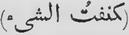 dans le sens de : j’ai caché la chose, et il explique ולא יכנף עוד מוריך Isaïe XXX, 20 : et celui qui t’éclaire ne se dérobera pas à toi et ne se voilera pas, ce qui est une bonne explication. De là vient, selon moi, (cette expression) ולא יגלה כנף אביו Deutéronome XXIII, 1, c’est-à-dire : il ne soulèvera pas le voile de son père. De même les mots ופרשת כנפך על אמתך Ruth III, 9 doivent être expliqués, selon moi : étends ton voile sur ta servante.
- 1 C’est le célèbre grammairien et lexicographe R. Ionâ, appelé en arabe Abou’l-Walîd Merwân ibn-Djanâ’h. Voy. ma Notice sur cet homme illustre dans le Journal asiatique, année 1850, cahier d’avril, etc.
- 2 Les mss. portent אלדׄי יקולון ; dans un ms. nous lisons אנה יקול. Nous avons écrit plus correctement אלדׄי יקול ; dans quelques mss. de la version d’Ibn-Tibbon le verbe est également au singulier (שיאמר).
- 3 Tous les mss. du Guide portent très distinctement מנירך ; dans le passage original du Dictionnaire d’Ibn-Djanâ’h, tel qu’il est cité par Gesénius, dans son Commentaire sur Isaïe et dans son Thesaurus (rad. (כנף), on lit מנורך
 . Cependant la copie que M. Goldberg a bien voulu m’adresser de ce passage d’Ibn-Djanâ’h, d’après le ms. d’Oxford, porte מטרך ; si cette leçon est exacte, Ibn-Djanâ’h aurait pris ici le mot מורה dans le sens de pluie (hâtive), ce qui, en effet, serait d’accord avec l’explication de R. Salomon Par’hon et de R. David Kim’hi, empruntée, sans doute, à Ibn-Djanâ’h. Le mot מטרך a pu facilement, par une faute de copiste, être changé en מנירך.
- 4 Ou : il ne découvrira pas le mystère de son père, la chose que son père entoure de mystère, c’est-à-dire, sa femme.
Ibn Ganaḥ (in his Book of Hebrew Roots) says that kenaf is used in the sense of “concealing,” in analogy with the Arabic kanaftu alshaian, “I have hidden something,” and accordingly explains, Isaiah 30:20, “And thy teacher will no longer be hidden or concealed.” It is a good explanation, and I think that kenaf has the same meaning in Deuteronomy 23:1, “He shall not take away the cover (kenaf) of his father”; also in, “Spread, therefore, thy cover (kenafeka) over thine handmaid” Ruth III:9.
ובחסב הד'א אלמעני ענדי אסתעיר כנף ללכ'אלק תעאלי וכד'לך ללמלאיכה אד' אלמלאיכה ליסוא בד'וי אג'סאם פי ראינא כמא סאבין פקולה אשר באת לחסות תחת כנפיו שרחה אלתי ג'ית לתסתכני תחת סתרה. וכד'לך כל כנף ג'א פי אלמלאיכה מענאה אלסתר אלא תתאמל קולה בשתים יכסה פניו ובשתים יכסה רגליו אן סבב וג'ודה אעני אלמלאך מסתור כ'פי ג'דא והו פניו וכד'לך אלאשיא אלתי הו סבבהא אעני אלמלאך אלתי הי רגליו כמא בינא פי אשתראך רגל הי איצ'א כ'פיה לאן אפעאל אלעקול כ'פיה לא יתבין את'רהא אלא בעד ארתיאץ' וד'לך בסבבין מן ג'התהא ומן ג'התנא אעני צ'עף אדראכנא וצעובהֵ אדראך אלמפארק מן חית' חקיקתה. ואמא קולה ובשתים יעופף פסאבין פי פצל מפרד לאי מעני נסבת חרכהֵ אלטיראן ללמלאיכה:
ולפי זה הענין אצלי הושאל ׳כנף׳ לבורא ית׳ וכן למלאכים כי המלאכים אינם בעלי גופות לפי דעתנו, כמו שאבאר. ואמרו: אֲשֶׁר בָּאת לַחֲסוֹת תַּחַת כְּנָפָיורות ב,יב פרושו: אשר באת לחסות תחת סתרו. וכן כל ׳כנף׳ שבא במלאכים ענינו – הסתר. הלא תתבונן אמרו: בִּשְׁתַּיִם יְכַסֶּה פָנָיו וּבִשְׁתַּיִם יְכַסֶּה רַגְלָיוישעיהו ו,ב – כלומר: שסבת מציאותו (רצוני לומר: המלאך) נסתרת נעלמת מאוד – והוא: ׳פניו׳; וכן הדברים אשר הוא סבתם (רצוני לומר: המלאך), אשר הם ׳רגליו׳ – כמו שבארתי בשתוף ׳רגל׳ – הם גם כן נעלמים; כי פעולות השכלים נעלמות – לא יתבאר ענינם אלא אחר למוד; וזה לשתי סיבות מצדם ומצדנו – רצוני לומר: חולשת השגתנו וקשי השגת הנפרד מצד אמיתתו. ואמנם אמרו: וּבִּשְׁתַּיִם יְעוֹפֵףישעיהו ו,ב והנני עתיד לבאר בפרק בפני עצמו, למה יחסו תנועת העופפות למלאכים.
- → I, 49, paragraphe 1 note de Munk · Efodi · Abravanel
- → II, 6, paragraphe 2 intelligence artificielle
- → I, 28 Wikisource
- 1 Référence entre parenthèses
C’est dans ce dernier sens, selon moi, qu’on a appliqué métaphoriquement le mot canaph כנף au Créateur, et de même aux anges ; car les anges, selon notre opinion, n’ont pas de corps, ainsi que je l’exposerai. Ainsi les mots אשר באת לחסות תחת כנפיו Ruth II, 12 doivent se traduire : sous le voile duquel tu es venue t’abriter. De même, toutes les fois que le mot canaph כנף est relatif aux anges, il a le sens de voile. N’as-tu pas remarqué ces mots : « Avec deux (ailes) il COUVRAIT sa face et avec deux il COUVRAIT ses pieds » Isaïe VI, 2 ? En effet, la cause de son existence — je veux parler de celle de l’ange — est enveloppée d’obscurité, et c’est là (ce qu’on a appelé) sa face. Et de même les choses dont celui-ci — je veux dire l’ange — est la cause, et qui sont (désignées par) ses pieds [comme nous l’avons expliqué en parlant de l’homonyme réghel], sont obscures aussi ; car l’action des Intelligences est obscure, et leur influence ne se manifeste (à nous) que lorsque nous nous sommes livrés à l’étude, et cela pour deux raisons, dont l’une est en elles et l’autre en nous, je veux parler de la faiblesse de notre compréhension et de la difficulté de comprendre l’Intelligence séparée dans sa réalité. Quant à ces mots : « et avec deux il volait » ibid., j’expliquerai dans un chapitre à part pour quelle raison on a attribué aux anges le mouvement de vol.
- 5 Voir ci-après, chap. XLIX.
- 1 La leçon varie dans les différents mss. ; la plupart portent לתסתכן, quelques uns לתסכן ou לתסתר ; mais le verbe doit être au féminin. La véritable leçon me paraît être לתםתכני
 , Xe forme du verbe
 . C’est par ce même, verbe que Saadia rend le verbe hébreu חםה. Voy., p. ex., à la fin du Ps. 2 (Ewald, Beitrœge etc., pag. 10).
- 2 Littéralement : est voilée et très cachée.
- 3 Voir ci-dessus, chap. XXVIII, pag. 94.
- 4 C’est-à-dire, l’action que les intelligences des sphères exercent sur le monde sublunaire. Il faut se rappeler que Maïmonide identifie les anges avec les intelligences séparées ou les intelligences des sphères. Voy. la IIe partie de cet ouvrage, chap. VI et XII. Cf. ci-dessus, chap. XXXVII, pag. 140, note 1.
- 5 Le mot אתׁרהא (leur trace ou impression) a été rendu dans la version d’Ibn-Tibbon par ענינם (leur choses, ce qu’elles sont) ; le traducteur a lu sans doute אמרהא. Ailleurs il rend le mot arabe אתׁר par מעשה ; mais Ibn-Falaquera fait observer qu’il vaudrait mieux le rendre par רישום (impression). Voir les notes critiques d’Ibn-Falaquera sur le chap. LXXII de cette Ire partie (Moré ha-Moré, pag. 153).
- 1 Voir ci-après, chap. XLIX.
In this sense, I think, the word is figuratively applied to God and to angels (for angels are not corporeal, according to my opinion, as I shall explain). Ruth 2:12 must therefore be translated “Under whose protection (kenafav) thou art come to trust”; and wherever the word occurs in reference to angels, it means concealment. You have surely noticed the words of Isaiah Isaiah VI:2, “With twain he covered his face, and with twain he covered his feet.” Their meaning is this: The cause of his (the angel’s) existence is hidden and concealed; this is meant by the covering of the face. The things of which he (the angel) is the cause, and which are called “his feet” (as I stated in speaking of the homonym regel, are likewise concealed: for the actions of the intelligences are not seen, and their ways are, except after long study, not understood, on account of two reasons—the one of which is contained in their own properties, the other in ourselves: that is to say, because our perception is imperfect and the ideals are difficult to be fully comprehended. As regards the phrase “and with twain he flieth,” I shall explain in a special chapter (xlix.) why flight has been attributed to angels.
Ce qui renvoie ici
Aucun renvoi connu vers ce chapitre.