Part I Chapter 63
On Ehyeh, Yah and Shaddai
נקדם תוטיה ונקול אן הד'א אלד'י קאלה ע"אס ואמרו לי מה שמו מה אמר אליהם כיף צאר ד'לך אלאמר לאזמא לה הד'א אלסואל חתי יטלב במא ד'א יג'אוב עליה אמא קולה והן לא יאמינו לי ולא ישמעו בקולי כי יאמרו לא נראה אליך י"י פהו בין ג'דא אן הכד'א יג'ב אן יקאל לכל מן אדעי אלנבוה חתי יאתי בדליל ואיצ'א אן כאן אלאמר כמא יבדו אנה מג'רד אסם ינטק בה פלא יכ'לו אלאמר אן יכונוא ישראל קד עלמוא ד'לך אלאסם או לם יסמעוה יומא קט פאן כאן מעלומא ענדהם פלא חג'ה לה פי אלאכ'באר בה לאן עלמה בה כעלמהם ואן כאן גיר מסמוע ענדהם פמא אלדליל אן הד'א אסם אללה אן כאן מערפהֵ אסמה דלילא. ת'ם אנה בעד אעלאמה לה תעאלי הד'א אלאסם קאל לה לך ואספת את זקני ישראל ושמעו לקולך ובעד הד'א ג'אוב הו ע"אס וקאל והן לא יאמינו לי ולא ישמעו בקולי וקד תקדם קולה תעאלי לה ושמעו לקולך פקאל לה תעאלי בעד ד'לך מה זה בידך ויאמר מטה.
נקדים הצעה ונאמר – שזה אשר אמרו משה עליו השלום: וְאָמְרוּ לִי מַה שְּׁמוֹ? – מָה אוֹמַר אֲלֵיהֶם?שמות ג,יג – איך היתה לענין ההוא ראויה זאת השאלה, עד שיבקש, במה זה ישיב עליה? אמנם אמרו: וְהֵן לֹא יַאֲמִינוּ לִי וְלֹא יִשְׁמְעוּ בְּקוֹלִי, כִּי יֹאמְרוּ: לֹא נִרְאָה אֵלֶיךָ יישמות ד,א – הוא מבואר מאוד שכן ראוי שיאמר לכל מי שיתפאר בנבואה עד שיביא מופת. ועוד, אם היה הענין כמו שיראה שהוא – שם ידובר בו לבד, לא ימלט הדבר מהיות ׳ישראל׳ כבר ידעו השם ההוא או לא שמעוהו כלל; ואם היה נודע אצלם – אין טענה לו בהגידו אותו, כי ידיעתו בו כידיעתם; ואם היה בלתי נשמע אצלם – מה הראיה שזה שם האל, אם היתה ידיעת שמו ראיה? ועוד, שהוא אחר שלמדו ית׳ זה השם אמר לו: לֵךְ וְאָסַפְתָּ אֶת זִקְנֵי יִשְׂרָאֵל... ושמעו לקולךשמות ג,טז ואחר זה ענה הוא ע״ה ואמר: וְהֵן לֹא יַאֲמִינוּ לִי וְלֹא יִשְׁמְעוּ בְּקוֹלִישמות ד,א – וכבר קדם אמרו ית׳ לו ׳ושמעו לקולך׳ – ואמר לו ית׳ אחר כך מזה בְיָדֶךָ?שמות ד,ב – וַיֹּאמֶר: מַטֶּהשמות ד,ב.
Nous ferons d’abord une observation préliminaire. Au sujet de ces paroles (de Moïse) : « S’ils me disent : quel est son nom ? que leur répondrai-je » Exode III, 13 ? (on peut demander d’abord :) comment la chose dont il s’agissait pouvait-elle amener une pareille question (de la part des Hébreux), pour que Moïse dût demander ce qu’il aurait à y répondre ? [Quant à ces paroles : « Certes ils ne me croiront point et n’obéiront point à ma voix ; car ils diront : l’Éternel ne t’est point apparu » Ibid., IV, 1, elles sont très claires ; car c’est là ce qu’on doit dire à quiconque prétend être prophète, afin qu’il en produise la preuve.] Ensuite, si, comme il semble (de prime abord), il s’agit là tout simplement d’un nom à prononcer, il faut nécessairement admettre, ou bien que les Israélites connaissaient déjà ce nom, ou bien qu’ils ne l’avaient jamais entendu. Or, s’il leur était connu, son énonciation ne pouvait pas servir d’argument à Moïse, puisqu’il n’en savait que ce qu’ils en savaient eux-mêmes ; si, au contraire, ils n’en avaient jamais entendu parler, qu’est-ce donc alors qui prouvait que ce fût là le nom de Dieu, en supposant même que la simple connaissance du nom pût servir de preuve (en faveur de Moïse) ? Enfin, Dieu, après lui avoir appris le nom en question, lui dit : « Va et assemble les anciens d’Israël….. et ils obéiront à ta voix » (Ibid., III, 16 et 18) ; puis Moïse lui répondit, en disant : Certes ils ne me croiront point et n’obéiront point à ma voix, quoique Dieu lui eût déjà dit : et ils obéiront à ta voix. Et là-dessus Dieu lui dit : Qu’est ce que tu as dans ta main ? et il répondit : « Une verge » Ibid., IV, 2.
- 1 La phrase précédente doit être considérée commo une parenthèse, où l’auteur, pour mieux faire ressortir l’obscurité des paroles de Moïse citées au commencement du chapitre, leur oppose la clarté d’autres paroles rapportées dans le même récit biblique. Ici il reprend les difficultés qu’offrent les paroles citées en premier lieu.
BEFORE approaching the subject of this chapter, we will first consider the words of Moses, “And they shall say unto me, What is His name? what shall I say unto them” Exodus III:13. How far was this question, anticipated by Moses, appropriate, and how far was he justified in seeking to be prepared with the answer? Moses was correct in declaring, “But, behold, they will not believe me, for they will say, The Lord hath not appeared unto thee” ib. IV:1; for any man claiming the authority of a prophet must expect to meet with such an objection so long as he has not given a proof of his mission. Again, if the question, as appears at first sight, referred only to the name, as a mere utterance of the lips, the following dilemma would present itself: either the Israelites knew the name, or they had never heard it: if the name was known to them, they would perceive in it no argument in favour of the mission of Moses, his knowledge and their knowledge of the divine name being the same. If, on the other hand, they had never heard it mentioned, and if the knowledge of it was to prove the mission of Moses, what evidence would they have that this was really the name of God? Moreover, after God had made known that name to Moses, and had told him, “Go and gather the elders of Israel. . . . and they shall hearken to thy voice” ib. XVI:18, he replied, “Behold, they will not believe me nor hearken unto my voice,” although God had told him, “And they will hearken to thy voice”; whereupon God answered, “What is that in thine hand?” and he said, “A rod” ib. IV:2.
ואלד'י תעלמה פיבין לך כל הד'א אלמשכל הו מא אקול לך. קד עלמת שהרהֵ מד'אהב אלצאבה פי תלך אלאזמאן וכון אלנאס כלהם אלא אחאד עובדי עבודה זרה אעני אעתקאד אלרוחאניאת ואלאסתנזאלאת ועמל אלטלסמאת וכאן דעוי כל מדע פי אלאזמאן כלהא אמא אן ידעי אנה חצל לה נט'ר ואסתדאל דלה באן ת'ם אלאה ללעאלם בג'מלתה מת'ל אברהם או ידעי אנה נזלת עליה רוחאניהֵ כוכב או מלך ונחו ד'לך פאמא שכ'ץ ידעי אלנבוה באן אללה כלמה וארסלה פלם יסמע הד'א קט קבל משה רבנו. ולא יגלטך מא ג'א פי אלאבות מן ד'כר כלאם אללה להם ותג'ליה עליהם לאנך לא תג'ד ד'לך אלנחו מן אלנבוה לידעוא אלנאס או לירשדוא גירהם חתי קאל אברהם או יצחק או יעקב או מן תקדמהם ללנאס קאל לי אללה אפעלוא או לא תפעלוא או ארסלני לכם הד'א לם יכן קט בל כאן אלכ'טאב להם פי מא יכ'צהם לא גיר אעני פי כמאלהם וארשאדהם למא יפעלון ותבשירהם במא יוול אליה אמר נסלהם לא גיר והם כאנוא ידעון אלנאס באלנט'ר ואלתעלים כמא באן ענדנא פי קולה ואת הנפש אשר עשו בחרן.
ואשר תדעהו ויבאר לך כל זה הספק הוא מה שאומר לך. כבר ידעת פרסום דעות הצאבה בזמנים ההם, והיות בני אדם כולם אלא יחידים ׳עובדי עבודה זרה׳ – רצוני לומר: האמנת הרוחניות והורדת הרוחות ועשית הטלסמאות. והיה דבר כל מתפאר בזמנים ההם כולם, אם שיתפאר שעלה בידו עיון ומופת הורהו שיש אלוה לעולם בכללו כאברהם, או יתפאר שירדה עליו רוחניות כוכב או מלאך וכיוצא בזה; אבל איש שיתפאר בנבואה, לאמר, שהאלוה דיבר אליו ושלחו, לא נשמע זה כלל קודם משה רבינו. ואל יטעך מה שבא ב׳אבות׳ מזכרון דבר האלוה להם והראותו אליהם; שאתה לא תמצא הענין ההוא מן הנבואה לקרוא לבני אדם או להישיר זולתם, עד שיאמר אברהם או יצחק או יעקב או מי שקדמם לבני אדם: ״אמר לי האלוה עשו כך״ או ״לא תעשו״ או ״שלחני אליכם״ – זה לא היה כלל; אבל היה הדיבור להם במה שהיה מיוחד להם, לא דבר אחר – רצוני לומר: בשלמותם והישירה למה שיעשו, ובשרם במה שיגיע אליו ענין זרעם, לא זולת זה; והם היו מישרים בני אדם על דרך עיון ולימוד, כמו שהתבאר אצלנו באמרו: וְאֶת הַנֶּפֶשׁ אֲשֶׁר עָשׂוּ בְחָרָןבראשית יב,ה,
- Another work: Rabbinic exegesis (Onkelos; Genesis Rabbah 39) artificial intelligence
Ce qu’il faut savoir, pour que toutes ces obscurités te soient éclaircies, c’est ce que je vais te dire. Tu sais combien étaient répandues en ces temps là les opinions des Sabiens, et que tous les hommes alors, à l’exception de quelques uns, étaient livrés à l’idolâtrie, je veux dire qu’ils croyaient aux esprits (des astres) et aux conjurations, et qu’ils faisaient des talismans. La prétention de quiconque s’arrogeait (une mission divine) s’était de tout temps bornée à ceci : ou bien il soutenait qu’en méditant et en cherchant des preuves il lui avait été démontré qu’un seul Dieu présidait à l’univers entier,—et c’est ainsi que fit Abraham,—ou bien il prétendait que l’esprit d’un astre, ou un ange, ou un autre être semblable, s’était révélé à lui. Mais que quelqu’un se prétendît prophète, (disant) que Dieu lui avait parlé et l’avait envoyé, c’est ce qu’on n’avait jamais entendu avant Moïse, notre maître. Il ne faut pas te laisser induire en erreur par ce qu’on raconte des patriarches, en disant que Dieu leur adressait la parole et qu’il se manifestait à eux ; car tu ne trouveras pas ce genre de mission prophétique (qui consiste) à faire un appel aux hommes ou à guider les autres, de sorte qu’Abraham, ou Isaac, ou Jacob, ou ceux qui les précédaient, aient dit aux hommes : « Dieu m’a dit que vous devez faire ou ne pas faire (telle chose) », ou bien : « il m’a envoyé vers vous ». Jamais pareille chose n’a eu lieu ; au contraire, il ne leur fut parlé d’autre chose que de ce qui les concernait particulièrement, je veux dire, (qu’il s’agissait) de les rendre parfaits, de les diriger dans ce qu’ils devaient faire et de leur annoncer quel serait l’avenir de leur race, mais pas d’autre chose ; et eux, ils appelaient les hommes au moyen de l’étude et de l’enseignement, ce qui, selon nous, est clairement indiqué dans ces mots : « et le personnel qu’ils s’étaient fait à Haran » Genèse XII, 5.
- 2 Par le mot צאבה̈
 , Sabiens ou Sabéens, notre auteur, à l’exemple d’autres écrivains arabes, désigne les adorateurs des astres, et en général les idolâtres ; on trouvera des détails sur les Sabiens dans la IIIe partie de cet ouvrage, chap. XXIX, où l’auteur dit que la religion des Sabiens embrassait toute la terre.
- 1 Par
 , on entend l’esprit qui préside à un astre ou à une constellation, ainsi que l’apparition de cet esprit ; la faculté de faire descendre les esprits des astres dans les idoles ou dans les talismans s’appelle
 ou simplement
 . Les talismans (τε έσματα) sont des figures gravées sur une pierre ou sur une plaque, et représentant certaines constellations sous l’influence desquelles on désire se placer.
- 2 Dans la version d’Ibn-Tibbon il faut lire דבר, et non pas כבר, comme l’ont la plupart des éditions ; il faut aussi lire בזמנים כלם et effacer le pronom ההם.
- 1 C’est-à-dire : pour appeler les hommes à eux et leur faire partager leur propre conviction, ils employaient les moyens de l’étude et de l’enseignement. Au lieu de ידעון, Ibn-Tibbon a peut-être lu ירשדון, car sa traduction porte היו מישרים, ils dirigeaient. Al-’Harizi traduit : היו מיהרים, ce qui n’offre pas de sens convenable ; on peut présumer qu’il y a ici une faute de copiste dans le manuscrit unique de la version d’Al-’Harizi.
- 2 L’auteur entend par ces mots les personnes qu’Abraham et Sara avaient instruites et converties à leur croyance. La version chaldaïque d’Onkelos dit de même : וית נפשתא דשעבדו לאוריתא בחרן, et les personnes qu’ils avaient soumises à la Loi religieuse à ’Haran. C’est dans le même sens que ce passage a été expliqué par les anciens rabbins ; voy.Talmud de Babylone, Synhedrîn, fol. 99 b : כל המלמד את בן חברו הורה מעלה עליו הכתוב כאילו עשאו שנאמר ואת הנפש אשר עשו בחרן Cf. Beréschíth rabba, section 39, vers la fin.
In order to obviate this dilemma, you must understand what I am about to tell you. You know how widespread were in those days the opinions of the Sabeans: all men, except a few individuals, were idolaters, that is to say, they believed in spirits, in man’s power to direct the influences of the heavenly bodies, and in the effect of talismans. Any one who in those days laid claim to authority, based it either, like Abraham, on the fact that, by reasoning and by proof he had been convinced of the existence of a Being who rules the whole Universe, or that some spiritual power was conferred upon him by a star, by an angel, or by a similar agency; but no one could establish his claim on prophecy, that is to say, on the fact that God had spoken to him, or had entrusted a mission to him: before the days of Moses no such assertion had ever been made. You must not be misled by the statements that God spoke to the Patriarchs, or that He had appeared to them. For you do not find any mention of a prophecy which appealed to others, or which directed them. Abraham, Isaac, or Jacob, or any other person before them did not tell the people, “God said unto me, you shall do this thing, or you shall not do that thing.” or “God has sent me to you.” Far from it! for God spoke to them on nothing but of what especially concerned them, i.e., He communicated to them things relating to their perfection, directed them in what they should do, and foretold them what the condition of their descendants would be; nothing beyond this. They guided their fellow-men by means of argument and instruction, as is implied, according to the interpretation generally received amongst us, in the words “and the souls that they had gotten in Haran” Genesis XII:5.
פלמא תג'לי עז וג'ל עלי משה רבנו ואמרה באן ידעו אלנאס ויוצל הד'ה אלרסאלה להם פקאל פאול מא יסאלונני אן אחקק להם אן ת'ם אלאה ללעאלם מוג'וד ובעד ד'לך אדעי אנה ארסלני אד' כאן אלנאס כלהם חיניד' אלא אחאד לא ישערון בוג'וד אלאלאה וגאיהֵ נט'רהם לא יתעדי אלפלך וקואה ואפעאלה לאנהם לם יפארקוא אלמחסוס ולא כמלוא כמאלא עקליא פאעלמה אללה חיניד' בעלם יוצלה אליהם יחקק ענדהם וג'וד אלאלאה והו אהיה אשר אהיה והד'א אסם משתק מן היה והו אלוג'וד לאן היה ידל עלי מעני כאן ולא פרק בין קולך כאן או וג'ד פי אללסאן אלעבראני. ואלסר כלה פי תכרירה אללפט' בעינה אלדאל עלי אלוג'וד פי מערץ' אלצפה לאן אשר תקתצ'י ד'כר אלצפה אלמתצלה בהא לאנהא אסם נאקץ יחתאג' אלי צלה במעני אלד'י ואלתי פי אלערבי פג'על אלאסם אלאול והו אלמוצוף אהיה ואלאסם אלת'אני אלד'י וצפה בה אהיה והו הו בעינה פכאנה צרח באן אלמוצוף הו אלצפה בעינהא פכאן ד'לך תביין מעני אנה מוג'וד לא בוג'וד פג'א תלכ'יץ ד'לך אלמעני ושרחה הכד'א אלמוג'וד אלד'י הו אלמוג'וד אי אלואג'ב אלוג'וד והד'א הו אלד'י יודי עליה אלברהאן צ'רורה אן הנא שי ואג'ב אלוג'וד לם יעדם ולא יעדם כמא סאבין ברהאן ד'לך.
וכאשר נראה ית׳ אל משה רבינו ע״ה וצוהו שיקרא לבני אדם ויגיע אליהם זאת השליחות, אמר: תחילת מה שישאלוני – שאאמת להם שיש אלוה לעולם נמצא, ואחר כך אומר, שהוא שלחני. מפני שכל בני אדם אז אלא יחידים, לא היו מרגישים במציאות האלוה, ותכלית עיונם לא היה עובר הגלגל וכוחותיו ופעולותיו – שהם לא היו נבדלים מן המורגש, ולא הושלמו שלמות שכלי. ולמדהו האלוה אז מדע שיגיעהו אליהם, יאמת אצלם מציאות האלוה והוא – ׳אהיה אשר אהיה׳ וזה שם נגזר מן ׳היה׳ והוא – המציאות, כי ׳היה׳ מורה על ענין ההויה, ואין הפרש בין אמרך ׳היה׳ או ׳נמצא׳ בלשון העברי. והסוד כולו הוא בשנותו המילה בעצמה המורה על המציאות בענין התואר; כי ׳אשר׳ גוזר זכרון התואר הנדבק בו, שהוא שם חסר, צריך אל חיבור, כענין ׳אלדי׳ ו׳אלתי׳ בערבי; והושם השם הראשון – והוא המתואר – ׳אהיה׳, והשם השני אשר תארו בו – ׳אהיה׳ והוא הוא בעצמו; וכאילו הראה שהמתואר הוא התואר בעצמו. והיה זה באור ענין, שהוא נמצא לא במציאות; ובא באור הענין ההוא ופרושו כן הנמצא אשר הוא הנמצא – כלומר: המחויב המציאות. וזה אשר יביא אליו המופת בהכרח שיש דבר מחויב המציאות לא נעדר ולא יעדר כמו שאבאר מופתו.
- → II, 1, paragraphs 11–12 artificial intelligence
Lors donc que Dieu se manifesta à Moïse, notre maître, et lui ordonna d’appeler ces hommes (à la foi) et de leur apporter le message en question : « Mais, répliqua celui-ci, ce qu’ils me demanderont tout d’abord, c’est de leur établir qu’il existe un Dieu pour l’univers, et ensuite je pourrai soutenir qu’il m’a envoyé. » En effet, tous les hommes alors, à l’exception de quelques uns, ignoraient l’existence de Dieu, et leur plus haute méditation n’allait pas au delà de la sphère céleste, de ses forces et de ses effets ; car ils ne se détachaient pas des choses sensibles et ne possédaient aucune perfection intellectuelle. Dieu donc lui donna alors une connaissance qu’il devait leur communiquer, afin d’établir pour eux l’existence de Dieu, et c’est (ce qu’expriment les mots) EHYÉ ascher EHYÉ (Je suis celui qui suis) ; c’est là un nom dérivé de HAYA היה, qui désigne l’existence, car HAYA signifie il fut, et, dans la langue hébraïque, on ne distingue pas entre être et exister. Tout le mystère est dans la répétition, sous forme d’attribut, de ce mot même qui désigne l’existence ; car le mot ascher (אשר, qui), étant un nom incomplet qui a besoin d’une adjonction et ayant le sens des mots alladzî  et allatî
 en arabe, exige qu’on exprime l’attribut qui lui est conjoint ; et, en exprimant le premier nom, qui est le sujet, par EHYÉ, et le second nom, qui lui sert d’attribut, par ce même mot EHYÉ, on a, pour ainsi dire, déclaré que le sujet est identiquement la même chose que l’attribut. C’est donc là une explication de cette idée : que Dieu existe, mais non par l’existence ; de sorte que cette idée est ainsi résumée et interprétée : l’Être qui est l’Être, c’est-à-dire, l’Être nêcessaire. Et c’est en effet ce qu’on peut rigoureusement établir par la voie démonstrative, (savoir) qu’il y a quelque chose dont l’existence est nécessaire, qui n’a jamais été non-existant et qui ne le sera jamais, ainsi que j’en exposerai (ailleurs) la démonstration.
- 1 Dans le système des grammairiens arabes, le pronom relatif est une espèce de conjonction ou d’adjectif conjonctif
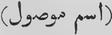 , qui exige nécessairement après lui, pour complément, une proposition conjonctive, appelée en arabe
 , adjonction ; voy. Silv. de Sacy, Grammaire arabe, t. I, pag. 443 et 444 (2e édition). Dans les mots אהיה אשר אהיה, le second אהיה forme l’adjonction de l’adjectif conjonctif אשר.
- 2 Voy. ci-dessus, chap. LVII, pag. 232.
- 3 Littéralement : et c’est ce à quoi la demonstration conduit nécessairement.
When God appeared to our Teacher Moses, and commanded him to address the people and to bring them the message, Moses replied that he might first be asked to prove the existence of God in the Universe, and that only after doing so he would be able to announce to them that God had sent him. For all men, with few exceptions, were ignorant of the existence of God; their highest thoughts did not extend beyond the heavenly sphere, its forms or its influences. They could not yet emancipate themselves from sensation, and had not yet attained to any intellectual perfection. Then God taught Moses how to teach them, and how to establish amongst them the belief in the existence of Himself, namely, by saying Ehyeh asher Ehyeh, a name derived from the verb hayah in the sense of “existing,” for the verb hayah denotes “to be,” and in Hebrew no difference is made between the verbs “to be” and “to exist.” The principal point in this phrase is that the same word which denotes “existence,” is repeated as an attribute. The word asher, “that,” corresponds to the Arabic illadi and illati, and is an incomplete noun that must be completed by another noun; it may be considered as the subject of the predicate which follows. The first noun which is to be described is ehyeh; the second, by which the first is described, is likewise ehyeh, the identical word, as if to show that the object which is to be described and the attribute by which it is described are in this case necessarily identical. This is, therefore, the expression of the idea that God exists, but not in the ordinary sense of the term; or, in other words, He is “the existing Being which is the existing Being,” that is to say, the Being whose existence is absolute. The proof which he was to give consisted in demonstrating that there is a Being of absolute existence, that has never been and never will be without existence. This I will clearly prove (II. Introd. Prop. 20 and chap. i.).
פלמא אעלמה תעאלי באלדלאיל אלתי ית'בת בהא וג'ודה ענד עלמאיהם לאן בעד הד'א ג'א לך ואספת את זקני ישראל וועדה באנהם סיפהמון מא אלקיתה אליך ויקבלונה והו קולה ושמעו לקולך פראג'ע ע"אס וקאל פהם יקבלון אן ת'ם אלאה מוג'וד בהד'ה אלבראהין אלעקליה מא יכון דלילי אן הד'א אלאלאה אלמוג'וד ארסלני פאעטית לה אלמעג'זה. פקד תבין אן מעני קולה מה שמו אנמא מענאה מן הו הד'א אלד'י תזעם אנה ארסלך ואנמא קאל מה שמו תעט'ימא ואג'לאלא פי אלכ'טאב כאנה יקול אן ד'אתך וחקיקתך לא יג'הלהא אחד פאן סילת ען אסמך אי שי הו אלמעני אלד'י ידל עליה באלאסם ואנמא אסתשנע אן יכ'אטב ויקול באן ת'ם מן יג'הל הד'א אלמוג'וד וג'על ג'הלהם לאסמה לא ללמסמי.
וכאשר הודיעהו ית׳ הראיות אשר יתקים בהם מציאותו אצל חכמיהם (כי אחר זה בא: ׳לך ואספת את זקני ישראל׳ ויעד לו שהם יבינו מה שהודעתיו לך ויקבלוהו – והוא אמרו: ״ושמעו לקולך׳–) השיבו ע״ה ואמר: הנה הם יקבלו שיש אלוה נמצא באלו המופתים השכליים, מה תהיה ראיתי שזה האלוה הנמצא שלחני? ואז ניתן לו האות. הנה כבר התבאר שענין אמרו: ׳מה שמו?׳ – אמנם ענינו: מי הוא אשר תחשוב ששלחך? ואמנם אמר: ׳מה שמו׳? – לגדלו ולהדרו בסיפור כאילו אמר שעצמך ואמיתתך – לא יסכול אותה אדם, ואם אשאל על שמך: איזה דבר הוא הענין אשר יורו עליו בשם? ואמנם, הרחיק שיאמר לאלוה ית׳ שיש מי שיסכול זה הנמצא, ושם סכלותם לשמו, לא לנקרא בשם ההוא.
Dieu donc ayant fait connaître à Moïse les preuves par lesquelles son existence pouvait être établie pour leurs hommes instruits [car on dit plus loin : Va et assemble les ANCIENS d’Israël], et lui ayant promis qu’ils comprendraient ce qu’il lui avait enseigné et qu’ils l’accepteraient [ce qui est exprimé par ces mots : et ils obéiront à ta voix] : « S’il est vrai, répliqua Moïse, que, par ces démonstrations ressortant de l’intelligence, ils admettront qu’il existe un Dieu, par quoi prouverai-je que ce Dieu qui existe m’a envoyé ? » Et là-dessus il fut mis en possession d’un miracle.— Il est donc clair que les mots quel est son nom ne signifient autre chose si ce n’est : quel est celui par qui tu prétends être envoyé ? S’il a dit : quel est son nom ? ce n’était que pour s’exprimer d’une manière respectueuse en adressant la parole à Dieu ; c’est comme s’il eût dit : ton essence réelle, personne ne peut l’ignorer, mais si l’on me demande ton nom, quelle est l’idée indiquée par ce nom ? C’est que, trouvant inconvenant de dire, en adressant la parole (à Dieu), qu’il pourrait y avoir quelqu’un à qui cet être fût inconnu, il appliquait leur ignorance à son nom, et non pas à celui qui était désigné par ce nom.
- 4 Le texte arabe dit : מא אלקיתה אליך, ce que je t’ai enseigné, et de même la version d’Ibn-Tibbon : מה שהורעתיו לך ; sur cette construction irrégulière, où la conjonction
 sert à introduire un discours direct, et où elle remplace le verbe en disant, voy Silv. de Sacy, Grammaire arabe (2e édition), t. I, p. 568, et t. II, p. 468 (n° 843). On trouve la même construction un peu plus loin : כאנה יקול אן דׄאתך וחקיקתך לא יגׄהלהא אחד. La conjonction grecque ὅτι est quelquefois employée de la même manière, surtout dans le Nouveau-Testament, et de même la conjonction syriaque די ou ד.
- 1 C’est le miracle de la transformation de la verge, auquel l’auteur a fait allusion plus haut.
- 2 Littéralement : pour exalter et glorifier (Dieu) en lui parlant.
- 3 Tous les manuscrits portent םאלת ; mais, ce verbe étant évidemment au passif, nous avons écrit plus correctement סילת
 .
God thus showed Moses the proofs by which His existence would be firmly established among the wise men of His people. Therefore the explanation of the name is followed by the words, “Go, gather the elders of Israel,” and by the assurance that the elders would understand what God had shown to him, and would accept it, as is stated in the words, “And they will hearken to thy voice.” Then Moses replied as follows: They will accept the doctrine that God exists convinced by these intelligible proofs. But, said Moses, by what means shall I be able to show that this existing God has sent me? Thereupon God gave him the sign. We have thus shown that the question, “What is His name” means “Who is that Being, which according to thy belief has sent thee?” The sentence, “What is his name” (instead of, Who is He), has here been used as a tribute of praise and homage, as though it had been said, Nobody can be ignorant of Thy essence and of Thy real existence; if, nevertheless, I ask what is Thy name, I mean, What idea is to be expressed by the name? (Moses considered it inappropriate to say to God that any person was ignorant of God’s existence, and therefore described the Israelites as ignorant of God’s name, not as ignorant of Him who was called by that name.)
וכד'לך אסם יה הו מן מעני אזליהֵ אלוג'וד. ושדי פיה אשתקאק מן די אלד'י הו כפאיה והמלאכה היתה דים ואלשין במעני אשר מת'ל שכבר פיכון מענאה אשר די אלגרץ' פי ד'לך אנה לא יחתאג' פי וג'וד מא אוג'ד ולא פי אסתמדאדה לסואה בל וג'ודה תעאלי כאף פי ד'לך. וכד'לך אסם חסין משתק מן אלקוה וחסן הוא כאלונים. וכד'לך צור הו אסם משתרך כמא בינא
וכן שם ׳יה׳ הוא מענין נצחיות המציאה. ו׳שדי׳ – בו גזרה מן ׳די׳: וְהַמְּלָאכָה הָיְתָה דַיָּםשמות לו,ז; וה׳שין׳ – בענין ׳אשר׳, כמו ״שכבר״; ויהיה ענינו: ׳אשר די׳ – הכונה בזה: שהוא לא יצטרך במציאות מה שהמציא ולא בהתמידו, לזולתו, אבל מציאותו מספקת בו. וכן שם ׳חסין׳ נגזר מן הכח: וְחָסוֹן הוּא כָּאַלּוֹנִיםעמוס ב,ט. וכן ׳צור׳ הוא שם משותף כמו שבארנו.
- → I, 16, paragraphs 1–2 Munk's note
De même le nom de YAH יה implique l’idée de l’existence éternelle. — SCHADDAY שדי est dérivé de DAY די, qui signifie suffisance, — p. ex. : « la matière était דיס suffisante pour eux » Exode XXVI, 7— ; le schîn a le sens d’ascher אשר, comme, p. ex., dans sche-kebar (שכבר, « qui déjà », Ecclésiaste IV, 2), de sorte que le sens (dudit nom) est אשר די, qui est suffisant, ce qui veut dire qu’il n’a besoin d’aucun (être) en dehors de lui pour que ce qu’il produit arrive à l’existence et continue d’exister, mais que la seule existence de Dieu suffit pour cela. ’HASÎN חםין, de même, est un nom dérivé, (ayant le sens) de force, p. ex., « et il est fort חםׂן comme les chênes » Amos II, 9. De même ÇOUR צור est un homonyme, ainsi que nous l’avons expliqué.
- 4 L’auteur, qui ne s’explique pas clairement, paraît indiquer ici que le nom de YAH (יה) est, comme EHYÉ (אהיה), dérivé du verbe היה, être ; ailleurs, cependant, il déclare que יה est une partie du nom tétragrammate (מקצת שם המפורש, voy. Abrégé du Talmud, traité Yesôdé ha-Tôrâ, chap. VI, § 4). Quoi qu’il en soit, ce nom, dit l’auteur, indique l’existence éternelle et exprime l’idée de l’être nécessaire que l’auteur trouve dans le nom d’EHYÉ ; c’est ce même sens que l’auteur, à la fin de ce chapitre, attribue expressément au schem ha-mephorasch, quoique plus haut (chap. LXI) il ne se soit prononcé à cet égard que d’une manière dubitative (voy. ci-dessus, pag. 269 et 270). Sur ces différents noms, cf. Khozari, liv. IV, § 3.
- 1 Au lieu de אםתמרארה plusieurs manuscrits portent אםתמרארה (avec resch), ce qui est à peu près la même chose ; cf. ci-après, à la fin du chap. LXIX.
- 2 C’est-à-dire : le mot צור, qui signifie rocher, et qu’on emploie quelquefois pour désigner Dieu. Voy. ci-dessus, chap. XVI.
The name Jah likewise implies eternal existence. Shadday, however, is derived from day, “enough”; comp. “for the stuff they had was sufficient” (dayyam, Exodus XXXVI:7) the shin is equal to asher, “which,” as in she-kebar, “which already” Ecclesiastes II:16. The name Shadday, therefore, signifies “he who is sufficient”; that is to say, He does not require any other being for effecting the existence of what He created, or its conservation: His existence is sufficient for that. In a similar manner the name ḥasin implies “strength”; comp. “he was strong (ḥason) as the oaks” Amos II:9. The same is the case with “rock,” which is a homonym, as we have explained (chap. xvi.).
פקד באן לך אן אלאסמא כלהא משתקה או תקאל באשתראך מת'ל צור ואמת'אלה וליס ת'ם שם לה תעאלי גיר משתק גיר שם בן ארבע אותיות והו השם המפורש לכונה לא ידל עלי צפה בל עלי מג'רד וג'וד לא גיר ופי צ'מן אלוג'וד אלמטלק אן יכון דאימא אעני ואג'ב אלוג'וד.
הנה כבר התבאר לך, שהשמות כולם נגזרים (או יאמרו בשיתוף כ׳צור ודומהו), ואין ׳שם׳ לו ית׳ בלתי נגזר זולתי ׳שם בן ארבע אותיות׳ והוא ׳השם המפורש׳ להיותו בלתי מורה על תואר, אבל על מציאות לבד, לא דבר אחר. ובכלל המציאות המוחלט – שיהיה תמיד – רצוני לומר: מחויב המציאות.
- → I, 61, paragraph 1 artificial intelligence
- → within this chapter, paragraph 5 artificial intelligence
Il est donc clair que tous les noms (de Dieu) ou sont dérivés, ou bien se disent par homonymie comme ÇOUR צור et ses pareils. Enfin, il n’y a point de nom de Dieu qui ne soit pas dérivé, à l’exception du nom tétragrammate, qui est le schem ha-mephorasch ; car celui-ci ne désigne point un attribut, mais une simple existence, et pas autre chose. L’existence absolue renferme l’idée de ce qui est toujours, je veux dire de l’être nécessaire.
- 3 Dans la version d’Ibn-Tibbon, on lit צור ואמת ; mais le mot אמת, vérité, ne s’emploie jamais comme nom de Dieu. II est vrai que quelques manuscrits arabes ont également צור ואמת ; mais ואמת ne paraît être qu’une abréviation du mot arabe ואמתׄאלה, qu’on lit dans plusieurs manuscrits arabes. Al-’Harizi n’a pas rendu ce mot.
It is, therefore, clear that all these names of God are appellatives, or are applied to God by way of homonymy, like ẓur and others, the only exception being the tetragrammaton, the Shem ha-meforash (the nomen proprium of God), which is not an appellative; it does not denote any attribute of God, nor does it imply anything except His existence. Absolute existence includes the idea of eternity, i.e., the necessity of existence.
פאפהם מא אנתהי אליה אלקול:
והבן מה שהגיע אליו המאמר.
Pénétre-toi bien de tout ce que nous avons dit jusqu’ici.
Note well the result at which we have arrived in this chapter.
What refers here
No known reference to this chapter.
What refers here, according to artificial intelligence
The text says “as we have explained” without saying where. Artificial intelligence proposed this chapter as the target.
- I, 64 § 2 «כמו שבארנו באמרו» → § 4 sure Munk's note
Voy. au chap. précédent, pag. 284.
· Efodiלגדל ולהדר בספור כמו שבאר בפרק שלפני זה
— Back to I.63. - II, 39 § 1 «כמו שבארנו» → § 2 sure Munk's note
Voy. la Ire partie, ch. LXIII, p. 281-282.
— The patriarchs' kind of prophecy and teaching is discussed in I.63. - III, 51 § 20 «כבר בארנו בפרקים הקודמים שענין ׳ידיעת השם׳ הוא השגתו – וכאילו אמר זאת» uncertain artificial intelligence — Probably the chapters on the divine names (I.61-63); no commentator or Munk names the place.